🍿 PopcornCheck
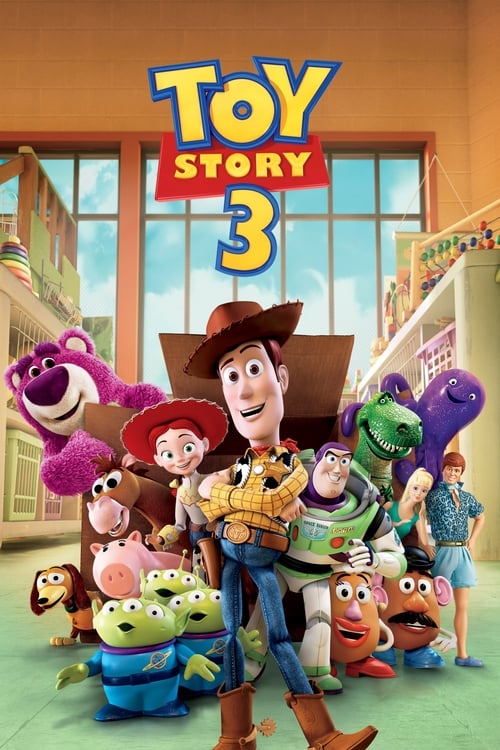
Toy Story 3 poster

Is Toy Story 3 OK for Kids?

AnimationFamilyComedy
6+
G⭐ 8.3 / 102010 · 1h 43m
Lee Unkrich

Where to Watch

United States

Stream

Disney Plus

Rent

Amazon VideoApple TV StoreGoogle Play MoviesYouTubeFandango At Home
Rent or Buy on Amazon

Streaming data by JustWatch

What's In It

Based on the actual screenplay
πŸ—‘οΈViolence
Mildβ–Ό
Moments in the script, mildest β†’ most intense
4
Cartoon / Comedic
3
Action & Peril
0
Injuries & Death Shown
0
Graphic & Disturbing
  • The film opens with a comedic play-scene where Sheriff Woody faces One-Eyed Bart β€” entirely cartoon in tone with no actual violence, played purely for laughs.
  • Toys push, shove, and fight each other in a prison riot at Sunnyside Daycare β€” generic toy conflict with no injuries and a cartoon quality throughout.
  • Big Baby and Lotso's guards physically restrain toys and carry them forcibly β€” presented as threatening and ominous rather than comedic.
  • Toys are thrown into a garbage truck and face a compactor β€” no blood or gore but the peril is real and sustained, making it the most intense action sequence.
  • A magnetic crane at the landfill grabs metal toys and there is danger of characters being crushed by heavy machinery.
  • Buzz, reprogrammed into demo mode, chases and physically restrains his friends β€” framed as danger from a brainwashed ally rather than straightforward violence.
  • No characters die on screen and no weapons are used; all violence is consequence-free in outcome though some sequences carry genuine threat.
πŸ’¬Language
Very Mildβ–Ό
Moments in the script, mildest β†’ most intense
10
Mild Words
(damn, hell)
0
Moderate
(ass, b**ch)
0
Strong
(sh*t)
0
Extreme
(f**k)
  • Characters say 'junk' three times, 'shut up' or 'zip it' four times, 'butt' once, 'doofus' once, and 'nuts' once.
  • No profanity of any kind β€” no da**, hell, a**, or stronger words detected in the extraction.
  • The harshest language is 'doofus' and 'shut up' β€” words most school-age children will have heard β€” used briefly and without emphasis.
πŸ‘»Scary Scenes
Extremeβ–Ό
Moments in the script, mildest β†’ most intense
2
Mildly Tense
1
Startling Moments
1
Genuinely Scary
2
Deeply Disturbing
  • Toys discover they have been placed in a garbage bag on the kerb, believing Andy is throwing them away β€” an emotionally tense scene that questions Andy's love and will unsettle younger children.
  • Sunnyside Daycare is introduced as paradise but is gradually revealed to be a prison controlled by Lotso β€” the slow discovery creates sustained dread.
  • Lotso is revealed as a villain who emotionally manipulates other toys, using false warmth to control them β€” his menace is psychological rather than physical, which may be more unsettling for young children than a monster.
  • Chuckles' backstory β€” explaining how Lotso was abandoned by his owner Daisy and subsequently turned cruel, betraying the other toys who trusted him β€” is rated Disturbing and may upset empathetic children who connect with themes of rejection.
  • The garbage truck compactor sequences place toys in genuine, sustained peril and are rated Scary β€” the threat is real and the sequence is prolonged.
  • The incinerator scene at the landfill, where toys face potential destruction and appear to accept their fate, is rated Startling and is the film's emotional peak β€” widely noted as the most intense moment in the Toy Story franchise.
  • Scary scenes are ultimately resolved positively β€” the toys are saved, Lotso is defeated, and the film ends with warmth and hope.
πŸ’•Romance
Moderateβ–Ό
Moments in the script, mildest β†’ most intense
2
Crushes & Holding Hands
1
Kissing & Dating
1
Suggestive
0
Sexual Content
  • Ken is immediately and comically smitten with Barbie upon meeting her, offering her Ken's Dream House β€” played entirely for laughs.
  • Ken and Barbie exchange 'I love you' repeatedly and kiss in a dream sequence β€” affectionate but age-appropriate and presented humorously.
  • Ken models clothes for Barbie in his dream house β€” flagged as mildly suggestive in context but executed as fashion comedy with no sexual implication.
  • Barbie ultimately breaks up with Ken and takes his scarf as leverage β€” the relationship arc is comedic and brief throughout.
🍺Substances
Very Mildβ–Ό
Moments in the script, mildest β†’ most intense
1
Mentioned in Passing
0
Shown Casually
0
Featured Prominently
0
Glorified or Abused
  • There is a single brief reference to coffee in an improv scene at the daycare β€” 'don't drink too much or you'll have to...' β€” which trails off as a throwaway joke.
  • Coffee is not shown, not glorified, and the reference is incidental and comedic rather than focused.
  • No alcohol, drugs, smoking, or any other substance use of any kind appears in the extraction.
⚑Stimulation
Moderateβ–Ό
Moments in the script, mildest β†’ most intense
0
Gently Engaging
1
Exciting
3
Intense
0
Overwhelming
  • The extended garbage truck and landfill sequences β€” featuring heavy machinery, compactors, and the incinerator β€” are rated Intense and represent sustained high-stakes sensory pressure.
  • The escape sequence from Sunnyside involves prolonged chase scenes and multiple obstacles in rapid succession β€” rated Intense and likely too much for younger or sensory-sensitive children at that pace.
  • The incinerator climax, where toys face destruction and Lotso is washed away, is a second Intense-rated sequence that follows closely on the landfill material, creating back-to-back emotional and sensory pressure.
  • The film closes with an Exciting β€” not Intense β€” montage of toys being played with happily by Bonnie, providing a gentle, warm cooldown after the climax.
  • Sensory-sensitive children may find the landfill and Sunnyside escape sequences overwhelming; the rest of the film is well-paced and manageable.
Toy Story 3 β€” Heads Up for Parents

Despite the U/G rating, the incinerator scene at the landfill β€” where the toys hold hands and appear to accept their destruction together β€” is an unexpectedly solemn, near-tragic moment that has reportedly moved adult viewers to tears and may genuinely distress children who have strong emotional bonds with their own toys; parents of sensitive children under 8 should be prepared to reassure them before the film ends.

About Toy Story 3

Toy Story 3 follows Woody, Buzz, and the rest of Andy's beloved toys as Andy prepares to leave for college, accidentally sending them to Sunnyside Daycare β€” a place that quickly reveals itself to be a corrupt toy prison run by a deceptively warm villain named Lotso. The film blends adventure and comedy with genuine emotional weight, exploring themes of growing up, loyalty, and finding purpose in a new chapter of life.

πŸ‘¨β€πŸ‘§
Best watched together
The incinerator scene, Lotso's psychological manipulation, and the emotionally heavy themes of abandonment and growing up are best experienced with a parent present for children under 8 β€” older children from around 8 or 9 can handle it independently, though the film rewards discussion at any age.

Family Takeaways from Toy Story 3

What it gets right

  • βœ“The garbage bag scene β€” where the toys believe Andy is discarding them β€” opens an honest, age-appropriate conversation about feeling forgotten or replaced, handled with emotional intelligence rather than cheap resolution.
  • βœ“The film portrays institutional corruption through Lotso's control of Sunnyside in a way children can understand: someone in power who uses kindness as a mask β€” a genuinely useful concept for children to recognise and discuss.

Toy Story 3 Cultural & Values Guide

Cultural & Values Guide

Values & Themes
●Traditional family values

The entire emotional arc centers on Andy growing up and the toys learning to let go for the sake of their 'family' bond. The film's climax is literally about Andy passing down his beloved toys to ensure they continue their purpose of bringing joy to children, emphasizing legacy and sacrifice for the next generation.


Cast:Tom HanksTim AllenJoan CusackDon RicklesWallace Shawn

Is Toy Story 3 Appropriate for Your Child's Age?

βœ—Age 5: Not recommended for 5-year-olds
βœ“Age 8: Generally appropriate for 8-year-olds
βœ“Age 10: Generally appropriate for 10-year-olds
βœ“Age 12: Generally appropriate for 12-year-olds
βœ“Age 13: Generally appropriate for 13-year-olds
βœ“Age 15: Generally appropriate for 15-year-olds
βœ“Age 17: Generally appropriate for 17-year-olds

Individual children may vary β€” use your judgment.

Parents also ask about Toy Story 3

  • Is Toy Story 3 appropriate for a 6-year-old?
  • Does Toy Story 3 have violence?
  • Is Toy Story 3 OK for kids?
  • What is the age rating for Toy Story 3?