🍿 PopcornCheck
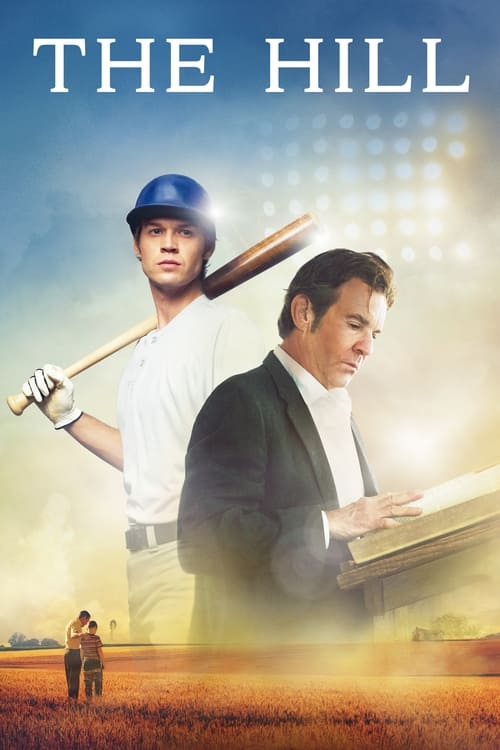
The Hill poster

Is The Hill OK for Kids?

HistoryDrama
9+
PG⭐ 6.7 / 102023 · 2h 1m
Jeff Celentano

Where to Watch

United States

Stream

Angel Studios

Rent

Amazon VideoApple TV StoreGoogle Play MoviesYouTubeFandango At HomeSpectrum On Demand
Rent or Buy on Amazon

Streaming data by JustWatch

What's In It

Based on the actual screenplay
πŸ—‘οΈViolence
Moderateβ–Ό
Moments in the script, mildest β†’ most intense
0
Cartoon / Comedic
4
Action & Peril
2
Injuries & Death Shown
0
Graphic & Disturbing
  • Earl Shantz, a drunk neighbor, physically shoves young Rickey to the ground during a tense confrontation outside the family's car as they are leaving town β€” Rickey is knocked down and James intervenes, shouting 'Don't you touch my boy'
  • James disciplines his teenage son Robert with a belt off-screen β€” the scene cuts away but Robert's sobs are audible and Rickey watches helplessly from outside; the physical act is not shown but the emotional impact is central to the scene
  • Rickey suffers a violent on-field injury during his senior baseball game β€” he steps on a sprinkler head mid-play, there is an audible crunch, and he collapses in visible agony; the subsequent medical description of severed tendons and shattered ankle is detailed and clinical
  • During the major league tryout, pitcher Jimmy Hammer deliberately beans Rickey in the ribs with a high-and-tight fastball β€” Rickey goes down in pain and the moment is framed as an act of intimidation
  • A childhood playground confrontation sees Quinn and other boys bully and taunt Rickey with slurs like 'robot boy,' 'cripple,' and 'jelly legs' β€” no physical fight occurs but the hostility is sustained and pointed
  • Overall violence is limited and consequence-focused β€” no weapons, no gore, no deaths by violence; all physical confrontations are brief and serve the emotional narrative
πŸ’¬Language
Mildβ–Ό
Moments in the script, mildest β†’ most intense
14
Mild Words
(damn, hell)
3
Moderate
(ass, b**ch)
0
Strong
(sh*t)
0
Extreme
(f**k)
  • Characters say 'da**' at least 4 times across the script (e.g., Earl: 'ain't about to allow some holier-than-thou preacher to toss me a few crumbs over a da** smoke'; James in car: 'God dang! God-- God!')
  • Characters say 'hell' at least 4 times (e.g., Coach Don: 'boot your whole a** off my field'; Red: 'What the hell's going on')
  • Characters say 'a**' and 'hind ends' at least 3 times (e.g., Coach Don: 'work your hind ends off'; 'boot your whole a**'; Ray: 'I'm sick and tired')
  • Characters say 'cr*p' twice (e.g., Coach Don: 'cut the cr*p and swing the bat'; Quinn: 'all that cr*p on your legs')
  • James nearly says 'God da**' in the rain breakdown scene, catching himself: 'God dang! God-- God!' β€” the near-profanity is contextually significant as a moment of spiritual crisis for a preacher
  • Red Murff uses 'cojones' once in reference to Rickey's boldness β€” mild but notable
  • Earl calls the church a scene of 'brimstone' and says 'da**' in church during a confrontation with the pastor
  • No f-words, c-words, or slurs of any kind detected; no sexual language of any kind
πŸ‘»Scary Scenes
Mildβ–Ό
Moments in the script, mildest β†’ most intense
5
Mildly Tense
1
Startling Moments
0
Genuinely Scary
0
Deeply Disturbing
  • The drunk Earl scene where he shoves Rickey is the most threatening moment β€” Earl is physically aggressive and unpredictable, and James must physically restrain him; the threat to family safety is real but brief and resolved quickly
  • Rickey's medical diagnosis scene is emotionally frightening rather than visually scary β€” the doctor states Rickey may never walk again and describes his spine as that of a 60-year-old man; this is sobering and distressing but not horror-adjacent
  • Gram's deathbed scene is gentle but emotionally heavy β€” she is clearly dying, says her goodbyes, and passes; the scene is framed peacefully but young children who have experienced loss may find it affecting
  • No jump scares, monsters, horror imagery, or supernatural threats of any kind
  • The bullying scenes involving Quinn and the other boys carry mild social threat β€” Rickey is outnumbered and mocked β€” but are resolved by Rickey triumphing athletically
πŸ’•Romance
Mildβ–Ό
Moments in the script, mildest β†’ most intense
4
Crushes & Holding Hands
1
Kissing & Dating
0
Suggestive
0
Sexual Content
  • Childhood Rickey and Gracie have an innocent 'boyfriend/girlfriend' relationship involving playful teasing and the phrase 'see you later, alligator' β€” purely sweet and age-appropriate
  • Adult Rickey and Gracie reunite and share tender, emotionally charged conversations about missing each other; Rickey says 'Not for one day' when asked if he ever forgot her
  • Rickey makes an informal marriage proposal suggestion to Gracie β€” 'Wouldn't it be something if he ended up being your last?' β€” which Gracie laughs off as insufficiently romantic; nothing physical occurs
  • Gracie briefly mentions she was in a relationship with Ned McCormack, a sports writer, and breaks it off during the film β€” no physical content shown
  • No kissing, no sexual content, no nudity, no sexual language, no implied intimacy of any kind
🍺Substances
Moderateβ–Ό
Moments in the script, mildest β†’ most intense
2
Mentioned in Passing
2
Shown Casually
2
Featured Prominently
0
Glorified or Abused
  • Earl Shantz is established as a heavy drinker β€” Connie warns Rickey that Earl 'drinks like a steer on a tank at noon'; Earl later appears visibly drunk, drives drunk, and is physically aggressive, and James explicitly tells him 'you're drunk, you shouldn't be driving' β€” drinking is portrayed as dangerous and negative
  • Earl and Sister Babbit smoke and chew tobacco during Sunday church services β€” this is the subject of a sustained conflict with Pastor James who asks them to stop, calling it 'defiling His glorious sanctuary'; Earl pushes back, framing it as a working man's only pleasure
  • Ned McCormack is described at dinner as having gambling and drinking tendencies β€” Gram says 'you have something more to chew on than gambling and drinkin'' directly to his face
  • Alcohol and tobacco are consistently framed as character flaws, social problems, or sources of conflict β€” never glorified or presented as cool or consequence-free
  • No drug use of any kind; no prescription drug misuse depicted
⚑Stimulation
Moderateβ–Ό
Moments in the script, mildest β†’ most intense
18
Gently Engaging
6
Exciting
2
Intense
0
Overwhelming
  • The film is predominantly slow-paced and dialogue-driven β€” long stretches of the script involve family conversations, church scenes, and quiet emotional moments that are gentle and unhurried
  • Baseball game sequences β€” particularly the junior high confrontation with Quinn and the final major league tryout β€” build in tension with crowd noise, announcer commentary, and dramatic music swells, but are not chaotic or overwhelming
  • The Gram deathbed scene and the car breakdown prayer scene are emotionally intense but visually and sonically quiet β€” these are likely to be the most emotionally stimulating moments for sensitive children
  • The rain scene where James has a breakdown by the roadside is sudden in its emotional shift but brief and resolved gently
  • Entirely appropriate for sensory-sensitive children β€” no strobe effects, no rapid-cut action editing, no extremely loud set pieces; the film's most intense moments are emotional rather than sensory
The Hill β€” Heads Up for Parents

Despite the film's wholesome, faith-family tone, the off-screen belt whipping of teenage Robert by his father James β€” audible through Robert's sobs while Rickey watches helplessly β€” is presented as a genuine act of parental cruelty rather than discipline, and James himself later calls his parenting style the source of his family's suffering; parents expecting an uncritical portrait of traditional Christian discipline may be surprised by how directly the film indicts James's harshness.

About The Hill

The Hill (2023) is an inspirational drama based on the true story of Rickey Hill, a boy born with degenerative bone disease who grows up in a poor Texas preacher's family and dreams of playing professional baseball against every odd imaginable. The film follows Rickey from childhood through young adulthood as he battles his physical limitations, a strict and controlling father who forbids baseball, poverty, and a catastrophic ankle injury, all while pursuing a tryout with major league scouts. The tone is earnest, faith-forward, and emotionally moving β€” a classic underdog sports story rooted in Southern Christian family life.

πŸ‘¨β€πŸ‘§
Best watched together
The film's themes of parental control, corporal punishment, disability, death of a grandparent, and a child forging a parent's signature to pursue a forbidden dream are all handled with emotional weight and are genuinely worth unpacking together β€” children aged 9–12 in particular will benefit from a parent present to contextualize James's arc from controlling father to repentant one, and to discuss whether Rickey's deception was right or wrong.

Family Takeaways from The Hill

What it gets right

  • βœ“The film portrays Christian faith with full sincerity and without condescension β€” church services, Scripture quotation, and personal prayer are woven naturally into family life, making it rare and valuable for faith-oriented families
  • βœ“Gram's deathbed scene is handled with grace and dignity β€” she passes after saying meaningful goodbyes and asking James to give Rickey his dream, offering families a gentle, loving framework for discussing death and legacy with children

The Hill Cultural & Values Guide

Cultural & Values Guide

No cultural or religious themes detected for this film.

Community Notes

  • Some viewers and critics have noted that James's corporal punishment of Robert is framed within a traditional Christian discipline context that may be uncomfortable for families who consider physical punishment of children to be harmful β€” the film does ultimately condemn James's harshness but does not explicitly condemn physical discipline as a practice
  • The film's portrayal of Earl Shantz β€” a violent, drunk, working-class man who disrupts church and assaults a child β€” has been flagged by some as a potentially unflattering stereotype of rural working-class Southern men

Cast:Colin FordDennis QuaidJoelle CarterScott GlennSiena Bjornerud

Is The Hill Appropriate for Your Child's Age?

βœ—Age 5: Not recommended for 5-year-olds
βœ—Age 8: Not recommended for 8-year-olds
βœ“Age 10: Generally appropriate for 10-year-olds
βœ“Age 12: Generally appropriate for 12-year-olds
βœ“Age 13: Generally appropriate for 13-year-olds
βœ“Age 15: Generally appropriate for 15-year-olds
βœ“Age 17: Generally appropriate for 17-year-olds

Individual children may vary β€” use your judgment.

Parents also ask about The Hill

  • Is The Hill appropriate for a 9-year-old?
  • Does The Hill have violence?
  • Is The Hill OK for kids?
  • What is the age rating for The Hill?