🍿 PopcornCheck
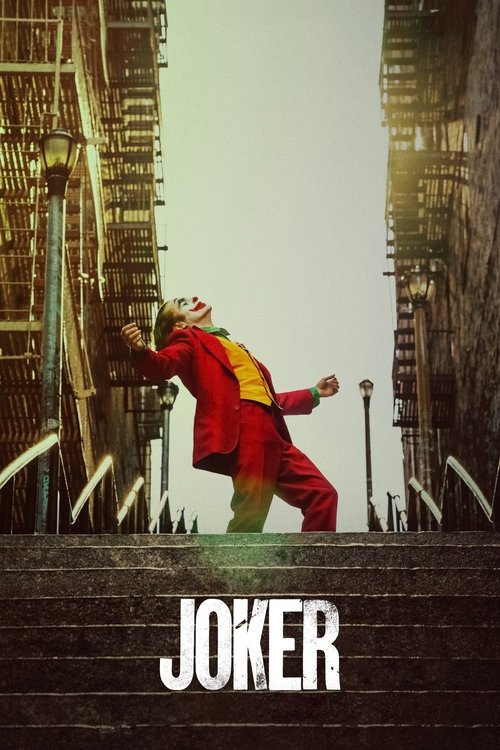
Joker poster

Is Joker OK for Kids?

CrimeThrillerDrama
17+
R⭐ 8.3 / 102019 · 2h 2m
Todd Phillips

Where to Watch

United States

Stream

HBO Max Amazon ChannelHBO Max

Rent

Amazon VideoApple TV StoreGoogle Play MoviesYouTubeFandango At HomeSpectrum On Demand
Rent or Buy on Amazon

Streaming data by JustWatch

What's In It

Based on the actual screenplay
πŸ—‘οΈViolence
Extremeβ–Ό
Moments in the script, mildest β†’ most intense
1
Cartoon / Comedic
3
Action & Peril
4
Injuries & Death Shown
3
Graphic & Disturbing
  • Arthur is beaten by a gang of five teenagers who knock him to the ground and kick and stomp him repeatedly on a Gotham side street β€” described as 'brutal and vicious,' nobody stops to help, and the screenplay holds on his smeared clown make-up during the beating
  • On the subway, Arthur shoots Wall Street Guy #1 at close range β€” 'blood splattering on the subway wall behind him' β€” then immediately shoots Wall Street Guys #2 and #3 in succession with a .38 snub-nose revolver while Bobby Short's 'Send in the Clowns' plays
  • Arthur chases the surviving third Wall Street man onto a subway platform, shoots him once causing him to tumble down a staircase, then walks to the body and empties his remaining bullets into it at close range β€” the script specifies 'BLAM! BLAM!' for each additional shot
  • Arthur is physically thrown out of Wayne Tower by two large security guards and hits the street; he charges the doors a second time and is stiff-armed again
  • In a scene kept deliberately ambiguous, Arthur is seen in an alley behind a dumpster 'furiously kicking and stomping on something' β€” the script notes it 'could be a cat… a cardboard box… a homeless person' β€” sustained and rage-driven with no resolution shown
  • Arthur slams his own head into his boss Hoyt's office wall three times hard enough to crack the plaster, with blood forming on his forehead
  • Arthur points the loaded .38 at the family cat, at his own head, then accidentally discharges the weapon into the apartment wall β€” a loud, shocking moment in a domestic setting
  • Violence is never comedic or consequence-free β€” it is sustained, realistic, and filmed to generate discomfort and sympathy simultaneously for the perpetrator
πŸ’¬Language
Extremeβ–Ό
Moments in the script, mildest β†’ most intense
3
Mild Words
(damn, hell)
4
Moderate
(ass, b**ch)
5
Strong
(sh*t)
12
Extreme
(f**k)
  • F**k / f**king used approximately 10 times across multiple characters: Sophie says 'f**king rude,' 'I don't f**king matter,' 'f**k them' (twice), 'what the f**k'; Wall Street #3 shouts 'B**ch' at the departing woman; Hoyt says 'f**king savages,' 'what the f**k Arthur'; Wall Street #1 says 'What the f**king funny'
  • S**t used at least 3 times: Hoyt says 'bulls**t' twice, 'They don't give a s**t about people like you'
  • A**hole used at least twice: Wall Street #2 says 'Something funny, a**hole?'; Wall Street #3 says 'I'll tell you what you have, a**hole'
  • B**ch: Wall Street #3 shouts 'B**ch' at the young woman on the subway
  • A** used once: Kid #2's line 'kicks him in the a**'
  • Da**, hell used in milder moments by secondary characters
  • Hoyt forces Arthur to repeat aloud 'I'm a f**k up and I'm fired' β€” twice, the second time louder β€” a scene of deliberate humiliation using strong language
  • Sophie says 'Jesus' as a mild exclamation and 'f**king rude' in her first scene on the elevator in front of her young daughter GiGi
πŸ‘»Scary Scenes
Extremeβ–Ό
Moments in the script, mildest β†’ most intense
4
Mildly Tense
2
Startling Moments
3
Genuinely Scary
5
Deeply Disturbing
  • The subway murder sequence is the most frightening sustained sequence in the script β€” Arthur shoots three men in a flickering, swaying subway car, the lights going dim between shots, blood on the walls, scored to a live recording of 'Send in the Clowns' β€” the combination of music, darkness, and clinical execution is designed to be deeply unsettling
  • Arthur raises the empty .38 to his own temple and pulls the trigger in a public bathroom mirror β€” played in close-up silence; the gun is only empty by chance
  • Arthur's journal entry 'I just hope my death makes more sense than my life' is read aloud by his social worker; later in private he rewrites 'I could have killed myself' to 'I should kill myself' β€” suicide ideation portrayed in prolonged, sympathetic close-up
  • The ambiguous alley scene where Arthur may be beating a cat or a person behind a dumpster is deliberately constructed to be psychologically disturbing without resolution β€” parents cannot tell what happened
  • Arthur in full clown make-up staring into a smudged public bathroom mirror, rehearsing lines to himself immediately after committing three murders, is a classic horror-cinema image of dissociation
  • The overall film is structured as a slow, inevitable descent β€” there are no jump scares but the cumulative dread of watching a sympathetic character become a killer is psychologically intense throughout
  • Arthur crushing medication into his elderly, bedridden mother's food β€” played without comment β€” is quietly horrifying in context
  • No scenes are resolved with comfort or safety; the script ends mid-descent with no redemptive moment
πŸ’•Romance
Moderateβ–Ό
Moments in the script, mildest β†’ most intense
4
Crushes & Holding Hands
1
Kissing & Dating
1
Suggestive
0
Sexual Content
  • Arthur has a quiet, one-sided crush on his neighbour Sophie Dumond β€” he holds the elevator door for her, stalks her route to work across multiple scenes (following her to her daughter's school, watching her on the subway platform, entering her bank), and nervously invites her to his comedy show
  • Arthur and Sophie share a meal at a Chinese restaurant and walk together after his open-mic set β€” conversation is the extent of their physical proximity
  • No kissing, no physical contact, no sexual dialogue between Arthur and Sophie in the pages provided
  • Arthur's joke journal contains 'cut out photos from hardcore pornographic magazines' β€” noted visually in the script when the social worker flips through it, not described in detail but explicitly named as pornographic
  • No sexual scenes or nudity described anywhere in the script
🍺Substances
Extremeβ–Ό
Moments in the script, mildest β†’ most intense
1
Mentioned in Passing
2
Shown Casually
2
Featured Prominently
1
Glorified or Abused
  • Arthur is prescribed seven psychiatric medications β€” Temazepam, Perphenazine, Ahenelzine, Amitriptyline, Benzedrine, Diazepam, Meprobamate β€” shown in a rapid-cut sequence of pill bottles tumbling onto a counter; he takes a handful at once
  • Arthur deliberately crushes two of his medications (Temazepam and Meprobamate) into his mother's food without her knowledge β€” shown in close-up detail across two scenes, presented as a routine
  • The social worker informs Arthur that city funding has been cut, meaning he will lose access to all seven medications β€” the script treats this as a significant and ominous development
  • Sophie smokes a cigarette on the subway platform and again outside the comedy club β€” shown casually, not commented on
  • The three Wall Street men are described as 'clearly drunk' when they board the subway; one carries a brown paper bag with alcohol inside, drinks from it on screen
  • Substance use is not glorified β€” Arthur's medication situation is framed as a systemic failure and a source of genuine vulnerability; the Wall Street men's drunkenness directly contributes to the violence that follows
⚑Stimulation
Extremeβ–Ό
Moments in the script, mildest β†’ most intense
6
Gently Engaging
3
Exciting
4
Intense
2
Overwhelming
  • The subway murder sequence combines flickering lights, a swaying train, sudden gunshots, blood, and a swelling live music soundtrack β€” it is the most sensorially intense sequence in the script and is sustained across three connected scenes (subway car, platform, stairwell)
  • Arthur's accidental gun discharge in the family apartment is a sudden, loud, shocking moment in an otherwise quiet domestic scene β€” a genuine startle event
  • The script's pacing is largely slow and oppressive β€” long stretches of quiet humiliation and poverty interrupted by sudden eruptions of violence β€” this rhythm of dread-and-shock may be more disturbing than constant action
  • The city of Gotham is described throughout as smog-filled, garbage-lined, crowded with the desperate and the violent β€” the environmental texture is relentlessly grim and designed to feel suffocating
  • Not suitable for sensory-sensitive children β€” the combination of sudden loud violence, dark colour palette, and sustained psychological tension would be overwhelming
Joker β€” Heads Up for Parents

Parents expecting a comic book movie will be blindsided by the scene in which Arthur β€” at home, alone, in his mother's apartment β€” deliberately crushes two of his psychiatric medications into her dinner without her knowledge, a quiet act of harm presented without dramatic music or comment that is easy to miss but deeply disturbing in implication.

About Joker

Joker (2019) is a gritty, grounded origin story following Arthur Fleck, a mentally ill, impoverished clown-for-hire in a decaying 1981 Gotham City who slowly descends into violence and madness after a lifetime of abuse, neglect, and societal rejection. The film is an intimate character study with a deeply dark tone β€” there are no superhero action sequences, no fantasy elements, and no redemption arc. It is closer in spirit to Taxi Driver or The King of Comedy than to a traditional comic book film.

⚠️
Watch with your child
The script contains three on-screen executions, a suicide attempt (Arthur pulls the trigger of what he believes may be a loaded gun against his own head), written suicidal ideation presented in sympathetic close-up, and a protagonist the film actively invites viewers to empathise with as he becomes a killer β€” no child or teenager should watch this without a parent present and prepared to discuss mental illness, violence, and moral complexity in depth; recommended age 17 and above only.

Family Takeaways from Joker

What it gets right

  • βœ“The script is unusually honest about what it feels like to live with an uncontrolled neurological condition β€” Arthur's 'Forgive my laughter' card, his seven medications, and his social worker sessions give mental illness a human face that many viewers will recognise from their own lives or families
  • βœ“The film does not glamourise poverty β€” Gotham's garbage-strewn streets, broken elevators, cramped apartments, and defunded social services are shown as grinding and real, making class inequality visible in a way mainstream entertainment rarely attempts

Joker Cultural & Values Guide

Cultural & Values Guide

No cultural or religious themes detected for this film.

Community Notes

  • Mental health advocacy groups have raised concerns that the film's sympathetic framing of a violent, mentally ill protagonist risks reinforcing the harmful stereotype that people with psychiatric conditions are dangerous β€” Arthur's diagnoses are never specified but his violence is directly linked to his mental illness and medication loss throughout the script
  • Disability advocates have noted that Arthur's uncontrollable laughter (pseudobulbar affect) is used primarily as a source of humiliation and social exclusion rather than as an opportunity to educate, and that his 'Forgive my laughter' card being thrown on the floor by the bus passenger is presented as darkly comedic
  • Some critics and community safety researchers flagged the film's release in 2019 on the grounds that its 'incel-adjacent' narrative β€” a lonely, humiliated white man who becomes a celebrated folk hero through mass violence β€” could function as inspirational content for real-world violent actors; the FBI and DHS issued pre-release threat assessments in connection with the film

Cast:Joaquin PhoenixRobert De NiroZazie BeetzFrances ConroyBrett Cullen

Is Joker Appropriate for Your Child's Age?

βœ—Age 5: Not recommended for 5-year-olds
βœ—Age 8: Not recommended for 8-year-olds
βœ—Age 10: Not recommended for 10-year-olds
βœ—Age 12: Not recommended for 12-year-olds
βœ—Age 13: Not recommended for 13-year-olds
βœ—Age 15: Not recommended for 15-year-olds
βœ“Age 17: Generally appropriate for 17-year-olds

Individual children may vary β€” use your judgment.

Parents also ask about Joker

  • Is Joker appropriate for a 17-year-old?
  • Does Joker have violence?
  • Is Joker OK for kids?
  • What is the age rating for Joker?