🍿 PopcornCheck
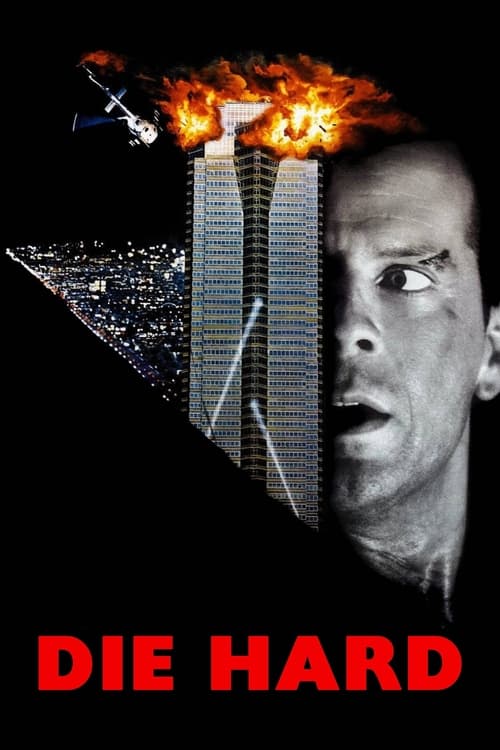
Die Hard poster

Is Die Hard OK for Kids?

ActionThriller
16+
R⭐ 8.2 / 101988 · 2h 12m
John McTiernan

Where to Watch

United States

Stream

Amazon Prime VideofuboTVYouTube TVFXNowAmazon Prime Video with Ads

Rent

Amazon VideoApple TV StoreGoogle Play MoviesYouTubeFandango At Home
Rent or Buy on Amazon

Streaming data by JustWatch

What's In It

Based on the actual screenplay
πŸ—‘οΈViolence
Extremeβ–Ό
Moments in the script, mildest β†’ most intense
0
Cartoon / Comedic
10
Action & Peril
4
Injuries & Death Shown
3
Graphic & Disturbing
  • A security guard is shot in the head with a silenced weapon in the film's opening terrorist takeover β€” the first killing establishes the gang's ruthlessness immediately.
  • Hans Gruber shoots Takagi in the head in the boardroom in front of multiple witnesses after calmly negotiating with him β€” cold-blooded execution shown on screen.
  • McClane breaks Tony's neck with his bare hands during a prolonged hand-to-hand fight on an unfinished floor of the building.
  • Karl is strangled with a chain wrapped around a turbine and shown turning blue before going limp β€” a prolonged and graphic death.
  • Hans Gruber is shot through the chest by McClane and then falls multiple stories from the skyscraper window, shown in full β€” the film's climactic death.
  • Marco's body crashes onto a police car hood from a great height; FBI helicopters are destroyed in a massive roof explosion triggered by McClane's plastique device.
  • Throughout the film, characters are killed by gunfire, explosion, and physical combat β€” deaths are frequent, shown on screen, and often not off-screen or implied. The overall tone is that lethal violence has real, visible consequences.
πŸ’¬Language
Extremeβ–Ό
Moments in the script, mildest β†’ most intense
20
Mild Words
(damn, hell)
12
Moderate
(ass, b**ch)
36
Strong
(sh*t)
75
Extreme
(f**k)
  • Extreme profanity is pervasive throughout the film: f**k/f**king/f**ked is used 47 times; s**t/shithead is used 28 times.
  • Strong profanity includes: godda**/goddamned (15 times), hell (12 times), a**hole (8 times), b**tard (4 times).
  • Moderate language includes: da** (6 times), cr*p (2 times).
  • Profanity is used casually in nearly every scene β€” by heroes, villains, and police alike β€” and is not treated as exceptional or shocking within the film's world.
πŸ‘»Scary Scenes
Extremeβ–Ό
Moments in the script, mildest β†’ most intense
2
Mildly Tense
2
Startling Moments
3
Genuinely Scary
1
Deeply Disturbing
  • The first murder β€” a security guard shot silently with a suppressed weapon β€” is startling and immediately establishes that the terrorists will kill without hesitation.
  • McClane discovers that extensive explosives have been planted throughout the entire building, creating sustained dread about the fate of 30+ hostages.
  • Karl hunts McClane methodically through elevator shafts and air ducts in a prolonged tense sequence with nowhere safe to hide.
  • Hans reveals on the rooftop that he has Holly as a hostage β€” a deeply scary moment as the personal stakes become direct.
  • A reporter, Thornburg, exploits McClane's children on live television to get his story, exposing them to danger β€” a disturbing misuse of media shown on screen.
  • McClane dangles on a fire hose outside the building during a massive roof explosion with structural collapse and a helicopter crash happening simultaneously.
  • The FBI helicopters attack McClane on the roof, mistaking him for a terrorist β€” a startling moment where the supposed rescuers become a lethal threat.
  • Scary scenes are generally resolved through McClane's resourcefulness, but several characters die and the danger is never defused by humour alone.
πŸ’•Romance
Moderateβ–Ό
Moments in the script, mildest β†’ most intense
1
Crushes & Holding Hands
2
Kissing & Dating
3
Suggestive
0
Sexual Content
  • McClane and Holly's relationship is the emotional core of the film β€” their private tension about their estranged marriage is discussed in Ellis's office, and Holly kisses McClane on the cheek in that scene.
  • The film ends with McClane and Holly kissing in a limousine after the crisis, signalling reconciliation.
  • Ellis makes unwanted dinner invitations toward Holly β€” played as a negative character trait that contributes to his being viewed unsympathetically.
  • There is a brief suggestive reference to a man and woman engaged in 'passionate lovemaking' on a desk, mentioned in dialogue but not shown.
  • A stewardess flirts with McClane about a teddy bear on the plane β€” mildly suggestive but brief and inconsequential.
🍺Substances
Moderateβ–Ό
Moments in the script, mildest β†’ most intense
1
Mentioned in Passing
2
Shown Casually
1
Featured Prominently
0
Glorified or Abused
  • Ellis sniffs cocaine visibly in Holly's office with white powder shown on his nose β€” depicted casually and without immediate consequence, though Ellis is later killed.
  • McClane smokes Marlboro cigarettes in multiple scenes throughout the film β€” shown as a habitual behaviour with no health commentary.
  • Argyle pours himself 'a stiff drink' in the limousine during the crisis β€” played for mild comic relief.
  • References are made to Dom Perignon champagne and holiday drinking at the Nakatomi Christmas party β€” mentioned in dialogue rather than shown as a focus.
  • Substance use is not glorified in a celebratory way, but cocaine use by Ellis is depicted with striking casualness and no negative framing in the moment.
⚑Stimulation
Extremeβ–Ό
Moments in the script, mildest β†’ most intense
0
Gently Engaging
1
Exciting
5
Intense
1
Overwhelming
  • The film maintains sustained tension from the terrorist takeover onward, with few calm scenes and frequent sudden gunfire, explosions, and close-quarters combat.
  • The roof explosion sequence β€” featuring structural building collapse, a helicopter crash, and McClane dangling on a fire hose β€” is classified as overwhelming in intensity and involves simultaneous loud audio and visual chaos.
  • Multiple intense sequences include: the computer room firefight with shattering glass and ricocheting bullets; the elevator cable snapping and crashing through the building interior; and the final vault room confrontation with multiple gunfights.
  • The film is not suitable for sensory-sensitive children or younger viewers β€” the action is relentless, the sound design is loud and percussive, and there is very little tonal relief between major sequences.
Die Hard β€” Heads Up for Parents

The most likely unexpected moment for parents is Ellis casually snorting cocaine in Holly's office with the powder visibly on his nose β€” it is depicted with complete normalcy and no comment, and arrives early in the film before the action begins, meaning parents who associate Die Hard purely with action may be caught off guard by this prominent on-screen drug use.

About Die Hard

Die Hard is a 1988 action thriller in which New York cop John McClane visits Los Angeles at Christmas to reconcile with his estranged wife Holly, only to find the Nakatomi Plaza skyscraper taken over by a sophisticated gang of terrorists led by the charming but ruthless Hans Gruber. Barefoot and outgunned, McClane fights back alone through the building's floors, ducts, and stairwells while the police and FBI bungle the response outside. The film is widely considered the defining action blockbuster of its era β€” relentlessly tense, darkly funny, and unambiguously R-rated.

⚠️
Watch with your child
The combination of 47 f-words, graphic on-screen executions including Takagi shot in the boardroom and the security guard shot in the head, visible cocaine use by Ellis, and a sustained overwhelmingly intense action climax means teenagers under 16 should only watch this with a parent present who can contextualise the violence, language, and drug use.

Family Takeaways from Die Hard

What it gets right

  • βœ“The marriage reconciliation arc is handled with real emotional honesty β€” McClane and Holly's estrangement stems from her ambition and his pride, and the film treats both positions with nuance rather than assigning simple blame.
  • βœ“Powell's arc of overcoming trauma β€” he has not fired his weapon since accidentally shooting a child and must overcome that paralysis to save McClane β€” is a genuine and affecting portrayal of carrying guilt and choosing to act despite it.

Die Hard Cultural & Values Guide

Cultural & Values Guide

Values & Themes
●Traditional family values

John McClane's entire motivation throughout the film is to save his estranged wife and reconcile his family. The film's emotional core centers on a husband fighting to protect his marriage and be reunited with his children.

Community Notes

  • Some critics have noted that the German terrorist villains β€” led by Hans Gruber β€” rely on a 'European sophistication as villainy' trope, contrasting McClane's working-class American everyman identity against refined European antagonists in a way that carries nationalistic undertones.
  • The portrayal of the FBI as arrogant, incompetent, and ultimately destructive has been noted by some commentators as reflecting a persistent anti-government institutional scepticism that frames individual action as inherently superior to collective authority.

Cast:Bruce WillisAlan RickmanAlexander GodunovBonnie BedeliaReginald VelJohnson

Is Die Hard Appropriate for Your Child's Age?

βœ—Age 5: Not recommended for 5-year-olds
βœ—Age 8: Not recommended for 8-year-olds
βœ—Age 10: Not recommended for 10-year-olds
βœ—Age 12: Not recommended for 12-year-olds
βœ—Age 13: Not recommended for 13-year-olds
βœ—Age 15: Not recommended for 15-year-olds
βœ“Age 17: Generally appropriate for 17-year-olds

Individual children may vary β€” use your judgment.

Parents also ask about Die Hard

  • Is Die Hard appropriate for a 16-year-old?
  • Does Die Hard have violence?
  • Is Die Hard OK for kids?
  • What is the age rating for Die Hard?