Where to Watch
United StatesRent


As an Amazon Associate, PopcornCheck earns from qualifying purchases. Search results may include other editions; confirm the title, year and availability on Amazon.
Streaming data by JustWatch
What's In It
Based on the actual screenplayViolenceModerate▼
LanguageVery Mild▼
Scary ScenesExtreme▼
RomanceVery Mild▼
SubstancesVery Mild▼
StimulationModerate▼

Despite its PG rating and animated format, the film contains a sustained and explicit threat directed at a child — the Moon King repeatedly states his intention to take Kubo's remaining eye — and the revelation that Monkey is Kubo's transformed mother recontextualises her death as a second loss of his mother, which may hit harder than parents expect for children who have experienced bereavement.
About Kubo and the Two Strings
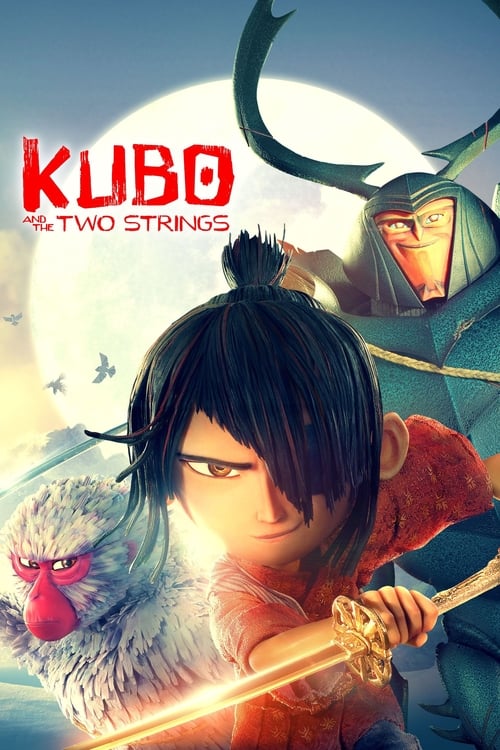
Kubo and the Two Strings is a visually stunning stop-motion animated adventure following Kubo, a one-eyed boy in ancient Japan who uses magical origami to tell stories and care for his ailing mother. When he accidentally summons vengeful spirits from his mother's past, he embarks on a quest with a talking monkey and an amnesiac beetle-warrior to find his late father's legendary armor. The film blends Japanese mythology, samurai culture, and deeply emotional themes of family, memory, and mortality into a tone that is both wondrous and genuinely melancholic.
Family Takeaways from Kubo and the Two Strings
What it gets right
- ✓The film handles grief and parental loss with rare emotional honesty for an animated film — Kubo's daily care for his incapacitated mother, and the eventual revelation that Monkey is his mother transformed, allow children to see love expressed through action rather than words
- ✓The resolution of the final confrontation — where the villagers use shared stories and memories to restore the Moon King's humanity rather than defeating him violently — is a genuinely powerful model of empathy triumphing over power
Kubo and the Two Strings Cultural & Values Guide
Cultural & Values Guide
The film explicitly explores Buddhist concepts of impermanence and letting go, as Kubo learns to accept loss and find peace through memories rather than clinging to the past. The entire narrative arc centers on Buddhist philosophy about the nature of attachment and acceptance.
The entire story is driven by honoring family legacy and the power of familial love that transcends death. Kubo's journey to understand his heritage and the sacrificial love of his parents forms the emotional and thematic core of the film.
Community Notes
- Some critics and members of the Japanese-American community raised concerns about cultural appropriation, noting that Laika is a Western studio and no Japanese directors or lead animators were involved in depicting Japanese cultural traditions — parents may wish to use the film as a starting point for deeper exploration of authentic Japanese cultural sources
Is Kubo and the Two Strings Appropriate for Your Child's Age?
Individual children may vary — use your judgment.
Parents also ask about Kubo and the Two Strings
- Is Kubo and the Two Strings appropriate for a 8-year-old?
- Does Kubo and the Two Strings have violence?
- Is Kubo and the Two Strings OK for kids?
- What is the age rating for Kubo and the Two Strings?