🍿 PopcornCheck
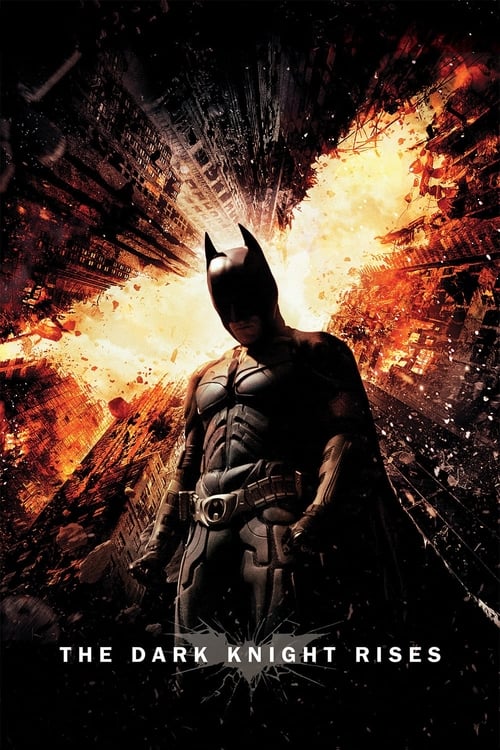
The Dark Knight Rises poster

Is The Dark Knight Rises OK for Kids?

ActionCrimeDramaThriller
13+
PG-13⭐ 8.4 / 102012 · 2h 45m
Christopher Nolan

Where to Watch

United States

Stream

HBO Max Amazon ChannelYouTube TVHBO Max

Rent

Amazon VideoApple TV StoreGoogle Play MoviesYouTubeFandango At HomeSpectrum On Demand
Rent or Buy on Amazon

Streaming data by JustWatch

What's In It

Based on the actual screenplay
πŸ—‘οΈViolence
Extremeβ–Ό
Moments in the script, mildest β†’ most intense
0
Cartoon / Comedic
18
Action & Peril
9
Injuries & Death Shown
2
Graphic & Disturbing
  • Bane defeats Batman in a prolonged underground fight, methodically battering him until he breaks Batman's back over his knee β€” the injury is shown clearly with Batman screaming, and Bruce spends much of the film paralysed and imprisoned as a result
  • The opening sequence shows CIA operatives being thrown out of a moving plane mid-air; one agent 'didn't fly so good' is referenced by Bane's men after being dropped to his death
  • Bane shoots John Daggett's assistant and implies Daggett himself is then killed off-screen; Daggett's body is later found in a dumpster
  • A large-scale battle sequence occurs when thousands of police officers charge Bane's mercenary army in a street war β€” gunfire, explosions, and hand-to-hand combat are shown across many minutes; officers are shot and fall
  • Talia al Ghul stabs Bruce Wayne in the side during a scene of apparent intimacy β€” the wound is shown and Bruce is left bleeding on the ground
  • Selina Kyle shoots Bane at close range with the Batpod's cannons, killing him β€” this is the film's most sudden lethal act and is treated as a decisive moment
  • Bane's mercenaries execute Special Forces soldiers who attempt a covert rescue; their hanging bodies are displayed publicly 'where the world can see'
  • Multiple explosions destroy bridges, roads, and a football stadium full of people β€” players are shown falling into collapsing ground; scale of destruction is large
  • Commissioner Gordon is shot in the sewers and pulled out seriously wounded; he is shown in a hospital bed recovering
  • Overall tone of violence is serious, consequence-driven, and not glorified β€” but it is frequent, physical, and occasionally brutal across the film's entire runtime
πŸ’¬Language
Mildβ–Ό
Moments in the script, mildest β†’ most intense
7
Mild Words
(damn, hell)
3
Moderate
(ass, b**ch)
0
Strong
(sh*t)
0
Extreme
(f**k)
  • Exact words detected: 'da**' (approximately 2 uses), 'hell' (approximately 4 uses), 'b**tard' (1 use β€” Foley says 'son of a b**ch' referring to Batman, approximately 1 use), 'a**' (implied in 'hothead' context), 'dumb b**ch' (1 use β€” Daggett says this directly to Selina Kyle)
  • Selina Kyle says 'You don't know what might be in your pants other than your wallet' β€” a mild sexual innuendo in a verbal sparring exchange with Bruce Wayne
  • One character says 'Jesus' as an exclamation (Blake, 1 use)
  • No f-words, c-words, or racial/ethnic slurs detected in the script
  • Language overall is restrained for a PG-13 action film; most dialogue is dramatic and plot-focused rather than profane
πŸ‘»Scary Scenes
Extremeβ–Ό
Moments in the script, mildest β†’ most intense
12
Mildly Tense
4
Startling Moments
7
Genuinely Scary
2
Deeply Disturbing
  • Bane is consistently frightening throughout the film β€” his mask, distorted voice, calm delivery of threats ('then you have my permission to die'), and physical dominance over Batman make him an unusually menacing villain for a superhero film
  • The scene where Bane announces to all of Gotham that a nuclear bomb is armed and mobile β€” with one anonymous citizen holding the trigger β€” creates a prolonged atmosphere of mass existential dread that runs through the second half of the film
  • The 'pit prison' sequences are claustrophobic and oppressive: Bruce is thrown into a deep underground prison, shown physically broken and unable to walk, with other broken men around him β€” the sense of hopelessness is sustained and intentional
  • Bane's origin story β€” a child born in a prison pit, with his mother killed by other prisoners β€” is described in detail and is genuinely dark
  • The nuclear bomb countdown in the final act creates intense sustained tension as the clock runs toward detonation with no guaranteed escape
  • Jonathan Crane (the Scarecrow from earlier films) presides over a kangaroo court sentencing people to 'death by exile' β€” forcing them to walk across cracking ice β€” which is both surreal and threatening
  • The film's tone throughout is one of civilisation collapsing β€” mob rule, martial law, mass imprisonment, and systematic dismantling of social order β€” which may be psychologically unsettling for younger viewers even absent individual jump scares
  • There are no traditional jump scares; the scariness is atmospheric, sustained, and rooted in realistic-feeling terrorism and social breakdown rather than horror imagery
πŸ’•Romance
Moderateβ–Ό
Moments in the script, mildest β†’ most intense
3
Crushes & Holding Hands
2
Kissing & Dating
2
Suggestive
0
Sexual Content
  • Bruce Wayne and Miranda Tate (later revealed as Talia al Ghul) spend a night together β€” this is implied through the script's staging (she is shown by his fireplace, the scene transitions imply they slept together) but nothing explicit is written in the dialogue or stage directions shown
  • Bruce Wayne and Selina Kyle have a flirtatious, tension-filled dynamic throughout β€” they dance together, trade witty verbal sparring, and Selina kisses Bruce briefly ('She gave him a quick kiss') near the end of the film; the final scene implies they are together
  • Alfred describes a fantasy of seeing Bruce with 'a wife, maybe a couple of kids' β€” romantic happiness is presented as a positive aspiration
  • Selina makes one mild sexual innuendo: commenting on what Bruce may or may not have 'in his pants other than his wallet'
  • No nudity, no explicit sexual content, and no prolonged romantic scenes; the romantic content is adult in implication but not in depiction
🍺Substances
Mildβ–Ό
Moments in the script, mildest β†’ most intense
3
Mentioned in Passing
1
Shown Casually
0
Featured Prominently
0
Glorified or Abused
  • The prison doctor is described as 'a morphine addict' β€” this is stated in dialogue as an explanation for his condition, not glorified; it is a single reference with no depiction
  • Alfred mentions ordering a 'Fernet Branca' (an alcoholic digestif) at a cafΓ© in his recurring Florence fantasy β€” shown as a wistful, melancholy memory, not glamorised
  • Champagne is referenced when Daggett says 'Open the champagne' to celebrate what he thinks is a business victory β€” briefly shown in a scene that ends in his death
  • No drug use is depicted on screen; no smoking depicted; alcohol references are minimal and incidental; nothing is glorified or shown as consequence-free
⚑Stimulation
Extremeβ–Ό
Moments in the script, mildest β†’ most intense
4
Gently Engaging
8
Exciting
9
Intense
3
Overwhelming
  • The film is nearly three hours long with sustained dramatic tension β€” the pacing rarely relaxes after the midpoint, which may be fatiguing for younger or sensory-sensitive viewers
  • The stock exchange robbery sequence involves rapid cutting between indoor hostage action, police response, motorcycle chases, and the Bat aircraft β€” fast, loud, and visually busy
  • The final act β€” simultaneous street battle, nuclear countdown, aerial chase of the bomb truck, and revelation of Talia's betrayal β€” layers multiple high-stakes storylines simultaneously and is likely to be overwhelming for children under 10
  • Hans Zimmer's score uses deep bass tones, chanting, and sudden loud musical stings throughout β€” the sound design is designed to create physiological tension
  • The football stadium explosion sequence is sudden, large-scale, and loud β€” the ground collapses under players mid-game
  • Not suitable for sensory-sensitive children; the film is engineered to create visceral anxiety and sustained dread as a cinematic experience
The Dark Knight Rises β€” Heads Up for Parents

The most likely surprise for parents is Talia al Ghul's betrayal scene: Miranda Tate, who has been presented throughout as a sympathetic romantic interest and ally, suddenly stabs Bruce Wayne in the side during what the audience assumes is an intimate scene, then reveals she is the daughter of Ra's Al Ghul and has orchestrated the entire plot β€” the combination of sexual implication immediately followed by a stabbing, and the revelation that the film's most trusted female character was the true villain, is tonally jarring and may disturb younger viewers who have emotionally invested in her character.

About The Dark Knight Rises

The Dark Knight Rises is the concluding chapter of Christopher Nolan's Batman trilogy, following a broken and reclusive Bruce Wayne who is forced back into the Batman suit when a brutal masked terrorist named Bane seizes control of Gotham City with a nuclear bomb. The film is a dark, operatic action thriller with themes of sacrifice, political upheaval, and redemption, carrying a consistently serious and weighty tone throughout its lengthy runtime.

πŸ‘¨β€πŸ‘§
Best watched together
The film's themes of civilisational collapse, prolonged hopelessness, and political betrayal β€” combined with Bruce Wayne's physical and psychological breakdown across much of the runtime β€” make it heavy even for mature 13-year-olds; a parent present can contextualise Bane's political manipulation, Talia's betrayal, and the nuclear threat sequences, and the finale raises natural conversation about sacrifice that is worth sharing rather than processing alone.

Family Takeaways from The Dark Knight Rises

What it gets right

  • βœ“The film takes seriously the emotional and physical cost of heroism β€” Bruce Wayne's broken body, years of isolation, and loss of Alfred's trust make the sacrifice feel earned rather than glamorous, which gives the story genuine emotional weight for older viewers
  • βœ“Blake's storyline β€” an orphan who grew up angry, learned to 'hide the anger' and 'put on a mask,' and ultimately receives the Batman legacy β€” offers a meaningful message about how personal pain can be channelled into protecting others rather than destroying them

The Dark Knight Rises Cultural & Values Guide

Cultural & Values Guide

Faith & Religion
●Buddhist themes

Bruce Wayne's training with the League of Shadows and Ra's al Ghul explicitly incorporates Eastern philosophical concepts of balance, inner peace, and confronting one's fears. Bane's underground prison emphasizes meditation, spiritual trials, and the Buddhist concept of rising through suffering.

Community Notes

  • Some critics and scholars noted that Bane's populist rhetoric β€” seizing wealth from the rich, releasing prisoners, holding show trials β€” borrows the language of left-wing revolution while framing it as pure villainy, which some read as a politically conservative framing of occupy-era protest movements
  • The film's Gotham is a majority-white city in apparent crisis whose salvation depends entirely on one wealthy white man, which some critics have noted as a limitation of the film's social imagination given its explicit themes of inequality and systemic corruption

Cast:Christian BaleGary OldmanTom HardyJoseph Gordon-LevittAnne Hathaway

Is The Dark Knight Rises Appropriate for Your Child's Age?

βœ—Age 5: Not recommended for 5-year-olds
βœ—Age 8: Not recommended for 8-year-olds
βœ—Age 10: Not recommended for 10-year-olds
βœ—Age 12: Not recommended for 12-year-olds
βœ“Age 13: Generally appropriate for 13-year-olds
βœ“Age 15: Generally appropriate for 15-year-olds
βœ“Age 17: Generally appropriate for 17-year-olds

Individual children may vary β€” use your judgment.

Parents also ask about The Dark Knight Rises

  • Is The Dark Knight Rises appropriate for a 13-year-old?
  • Does The Dark Knight Rises have violence?
  • Is The Dark Knight Rises OK for kids?
  • What is the age rating for The Dark Knight Rises?