🍿 PopcornCheck
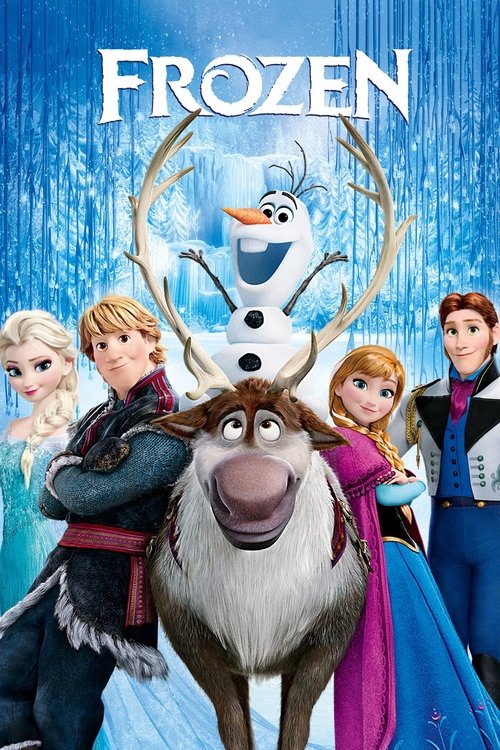
Frozen poster

Is Frozen OK for Kids?

AnimationFamilyAdventureFantasy
5+
PG⭐ 7.4 / 102013 · 1h 42m
Chris Buck● Script verified

Where to Watch

United States

Stream

Disney Plus

Rent

Amazon VideoApple TV StoreGoogle Play MoviesYouTubeFandango At Home
Rent or Buy on Amazon

Streaming data by JustWatch

What's In It

Based on the actual screenplay
πŸ—‘οΈViolence
Mildβ–Ό
Moments in the script, mildest β†’ most intense
5
Cartoon / Comedic
1
Action & Peril
0
Injuries & Death Shown
0
Graphic & Disturbing
  • Anna is struck by Elsa's ice magic as a child and loses consciousness β€” the inciting incident of the whole film, shown briefly and not graphically.
  • Kristoff and Anna are chased by a pack of wolves across a frozen landscape; the sled is ultimately destroyed in the escape β€” perilous but played in an action-adventure style with no injuries shown.
  • Marshmallow, a giant guardian snowman created by Elsa, hurls characters off a cliff edge with his massive icy arms β€” exaggerated and cartoon in tone.
  • Royal guards actively attempt to capture and kill Elsa during her escape from Arendelle, using crossbows β€” weapons are shown but no one is struck or killed on screen.
  • Hans reveals his true nature by betraying Anna and deliberately leaving her to die from a frozen heart β€” the most emotionally impactful act of violence in the film, involving no physical force but clear lethal intent.
  • Characters are struck by sharp ice spikes during a chase and escape sequence β€” shown in action-adventure style with no blood or lasting injury.
  • No characters die visibly on screen; the closest moment is Anna appearing motionless and frozen solid, which is resolved within minutes.
πŸ’¬Language
Very Mildβ–Ό
Moments in the script, mildest β†’ most intense
6
Mild Words
(damn, hell)
0
Moderate
(ass, b**ch)
0
Strong
(sh*t)
0
Extreme
(f**k)
  • The word 'monster' is used 5 times, directed at or by Elsa in the context of her powers being feared β€” emotionally loaded but not profanity.
  • The word 'crook' is used once, a mild insult with no offensive weight.
  • No profanity of any kind β€” no da**, hell, a**, s**t, or f-words detected in the extraction.
  • No slurs, no strong language, no content a parent would find objectionable in terms of words used.
πŸ‘»Scary Scenes
Moderateβ–Ό
Moments in the script, mildest β†’ most intense
2
Mildly Tense
1
Startling Moments
2
Genuinely Scary
0
Deeply Disturbing
  • Elsa loses control of her powers during the coronation ball and ice spreads uncontrollably across the hall β€” tense and emotionally charged, establishing the stakes of the film.
  • Anna's heart is gradually freezing throughout the second half of the film; her hair visibly turns white as the curse progresses β€” a sustained, creeping threat that younger children may find distressing.
  • Eternal winter descends on Arendelle with people visibly suffering from the cold β€” creates a stakes-driven sense of helplessness affecting an entire community.
  • Hans abruptly reveals he is a calculating villain to Anna in a closed room, leaving her to die β€” a startling tonal shift that may catch younger viewers off guard.
  • Anna appears to freeze completely solid and is believed dead by other characters β€” the most frightening moment in the film for young children, though it is resolved quickly through an act of love.
  • Scary scenes are consistently resolved with warmth and hope; no villain imagery lingers, and the film ends with the kingdom thriving and gates open.
πŸ’•Romance
Mildβ–Ό
Moments in the script, mildest β†’ most intense
2
Crushes & Holding Hands
4
Kissing & Dating
0
Suggestive
0
Sexual Content
  • Anna meets Prince Hans and instantly develops feelings for him β€” portrayed as an impulsive, idealistic crush that the film later critiques as naive.
  • Anna and Hans dance together at the coronation ball and sing 'Love is an Open Door' β€” cheerful and innocent romantic courtship.
  • Hans proposes to Anna after knowing her for a single day β€” the film uses this as a plot point to question the idea of 'love at first sight'.
  • Anna expects a true love's kiss from Hans to break the curse on her frozen heart β€” a classic fairy-tale trope that is deliberately subverted.
  • Kristoff and Anna share a brief kiss at the end of the film β€” sweet and age-appropriate, nothing lingering or passionate.
  • No sexual content, no nudity, no suggestive material of any kind.
🍺Substances
Mildβ–Ό
Moments in the script, mildest β†’ most intense
1
Mentioned in Passing
1
Shown Casually
0
Featured Prominently
0
Glorified or Abused
  • Chocolate fondue is mentioned briefly during the coronation ball scene β€” no substance concern whatsoever.
  • Hot glogg, an alcoholic mulled drink, is offered casually to citizens suffering from the cold β€” shown as a practical warming measure, not glorified or focused upon.
  • No character is shown drinking to excess, intoxicated, or using any illicit substance; the alcohol reference is background detail only.
⚑Stimulation
Moderateβ–Ό
Moments in the script, mildest β†’ most intense
0
Gently Engaging
2
Exciting
2
Intense
0
Overwhelming
  • The 'Let It Go' musical sequence β€” in which Elsa builds an ice palace β€” is visually spectacular and energetically paced, likely to be exciting and awe-inspiring rather than overwhelming.
  • The wolf chase sequence and the sled chase across the frozen fjord are back-to-back action scenes with fast pacing and high energy that may be a lot for very young or sensory-sensitive children.
  • The climactic confrontation between the sisters during the blizzard involves rapid environmental changes, high emotional stakes, and urgent pacing β€” the most intense sustained sequence in the film.
  • Overall the film balances its exciting sequences with quieter character moments and musical numbers; it is unlikely to overwhelm children aged 5+ but parents of sensory-sensitive children under 5 should be aware of the chase and climax sequences.
Frozen β€” Heads Up for Parents

Despite being a cheerful Disney musical, the scene in which Hans calmly informs the dying Anna that he never loved her and closes the fireplace to let her freeze to death is surprisingly cold-blooded β€” his detached cruelty is more psychologically unsettling than most Disney villains and may catch parents off guard, particularly for children aged 5–7 who may not fully process that a seemingly kind character was pretending the entire time.

About Frozen

Frozen is a Disney animated musical set in the Nordic kingdom of Arendelle, following Princess Anna as she embarks on a journey to find her estranged sister Elsa, whose uncontrolled ice magic has plunged the kingdom into eternal winter. Along the way Anna teams up with ice harvester Kristoff, his reindeer Sven, and the lovable snowman Olaf. The film is warm, funny, and emotionally rich, ultimately subverting fairy-tale conventions by centring its resolution on sisterly love rather than romantic love.

βœ…
Fine for kids to watch alone
Children aged 6 and above can comfortably watch Frozen independently β€” violence is cartoon in nature, language is entirely clean, and scary moments resolve warmly; however, parents of children aged 4–5 may want to be present for Hans's betrayal scene and Anna's freezing sequence, as these carry genuine emotional weight that younger children may need help processing.

Family Takeaways from Frozen

What it gets right

  • βœ“The film actively deconstructs the 'love at first sight' fairy-tale trope β€” Hans's betrayal is a direct consequence of Anna trusting someone she just met, giving families a natural opening to discuss stranger danger and healthy relationship pacing in an age-appropriate way.
  • βœ“Elsa's struggle with her powers as a metaphor for feeling different, ashamed, or overwhelmed by emotions is handled with real sensitivity β€” children who feel they must hide parts of themselves will find genuine emotional validation in her story.

Frozen Cultural & Values Guide

Cultural & Values Guide

Values & Themes
●Traditional family values

The entire emotional core centers on sisterly love and family reconciliation, with Elsa learning to embrace rather than fear her bond with Anna. The film's climax resolves through an act of true love between sisters, emphasizing family devotion above romantic relationships.

Community Notes

  • Some LGBTQ advocacy groups have read Elsa's journey β€” hiding a fundamental part of herself under family pressure, then embracing it publicly in 'Let It Go' β€” as an allegory for coming out; Disney has never confirmed this reading but it is widely discussed in cultural criticism and parents may encounter it in conversation with older children.

Screenplay

Loading screenplay…


Awards: Academy Award for Best Animated Feature and Best Original Song (Let It Go)

Cast:Idina MenzelKristen BellJonathan GroffJosh GadLivvy Stubenrauch

Is Frozen Appropriate for Your Child's Age?

βœ“Age 5: Generally appropriate for 5-year-olds
βœ“Age 8: Generally appropriate for 8-year-olds
βœ“Age 10: Generally appropriate for 10-year-olds
βœ“Age 12: Generally appropriate for 12-year-olds
βœ“Age 13: Generally appropriate for 13-year-olds
βœ“Age 15: Generally appropriate for 15-year-olds
βœ“Age 17: Generally appropriate for 17-year-olds

Individual children may vary β€” use your judgment.

Parents also ask about Frozen

  • Is Frozen appropriate for a 5-year-old?
  • Does Frozen have violence?
  • Is Frozen OK for kids?
  • What is the age rating for Frozen?