🍿 PopcornCheck
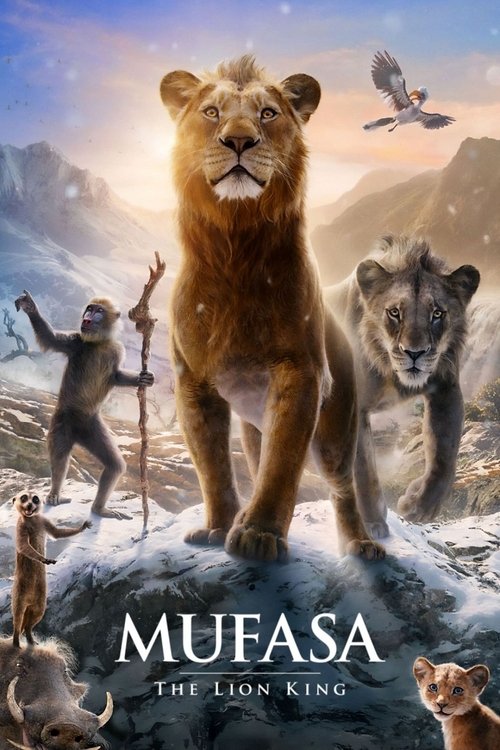
Mufasa The Lion King poster

Is Mufasa The Lion King OK for Kids?

AdventureFamilyAnimation
7+
PG⭐ 6.6 / 102024 · 1h 58m
Barry Jenkins

Where to Watch

United States

Stream

Disney Plus

Rent

Amazon VideoApple TV StoreGoogle Play MoviesYouTubeFandango At Home
Rent or Buy on Amazon

Streaming data by JustWatch

What's In It

Based on the actual screenplay
πŸ—‘οΈViolence
Extremeβ–Ό
Moments in the script, mildest β†’ most intense
2
Cartoon / Comedic
8
Action & Peril
1
Injuries & Death Shown
1
Graphic & Disturbing
  • Young Mufasa is swept away by flood waters during a rain storm, forcibly separated from his parents β€” the film's most emotionally distressing sequence and the inciting trauma of the story.
  • Young Mufasa is chased by crocodiles in a river in a fast-paced, dangerous sequence with clear threat of being eaten.
  • Eshay and Mufasa are attacked by Shetara, a hostile lioness, during a hunting scene β€” Eshay is badly wounded in the encounter, shown clearly enough to register as a serious injury.
  • King Obasi confronts Mufasa about leaving his son to die, with references to blood on their names β€” the most emotionally graphic moment, involving guilt and accusation rather than on-screen gore.
  • A large battle sequence features multiple animal tribes fighting outsider lions simultaneously, involving roaring, physical combat, an elephant stampede, and a bee swarm attack on characters.
  • The final confrontation between Mufasa and Taka/Scar involves roaring and direct physical fighting between the two brothers.
  • Hunting and the prospect of being eaten are referenced throughout in a comedic context, consistent with the natural animal-world setting of the franchise.
  • Violence is never gory and no human characters are harmed β€” all action is animal-on-animal and broadly consistent in tone with the original Lion King, though with higher intensity in battle sequences.
πŸ’¬Language
Very Mildβ–Ό
Moments in the script, mildest β†’ most intense
16
Mild Words
(damn, hell)
0
Moderate
(ass, b**ch)
0
Strong
(sh*t)
0
Extreme
(f**k)
  • The word 'hell' appears once in the film.
  • The word 'stray' is used 15 times β€” primarily as a social slur directed at Mufasa for being an outsider without a pride, carrying meaningful weight as a term of prejudice within the story.
  • No f-words, c-words, s-words, or any moderate-to-strong profanity detected.
  • No creative insults or near-profanity beyond the instances listed above.
πŸ‘»Scary Scenes
Extremeβ–Ό
Moments in the script, mildest β†’ most intense
2
Mildly Tense
1
Startling Moments
4
Genuinely Scary
1
Deeply Disturbing
  • The flood separation scene β€” young Mufasa is torn from his parents by rushing water and calls out for them β€” is the single most frightening and emotionally distressing sequence, likely to upset children under 7.
  • The Shetara hunting sequence features suspenseful music, growling, and genuine threat, and is described as genuinely scary in tone.
  • The crocodile chase in the river is a tense, fast-moving sequence with clear danger to Mufasa.
  • Kiara is shown alone and frightened during a storm β€” a relatable fear scenario for young children that mirrors the emotional weight of the framing story.
  • Taka's betrayal is revealed as a disturbing moment β€” it is disclosed that he led hunters directly to the kingdom, representing a shocking violation of trust from a character the audience has followed.
  • Outsider lions track Mufasa and companions throughout a mountain passage in a sustained tense pursuit.
  • An avalanche or earth-shaking moment occurs near a waterfall, categorised as a startling sudden shock.
  • The final battle with roaring lions and multiple tribes fighting is loud and visually intense.
  • Scary scenes are generally resolved through Mufasa's courage and collective unity rather than left unresolved β€” the film follows a hopeful, redemptive structure.
πŸ’•Romance
Moderateβ–Ό
Moments in the script, mildest β†’ most intense
3
Crushes & Holding Hands
0
Kissing & Dating
3
Suggestive
0
Sexual Content
  • Mufasa develops a crush on Sarabi, a lioness β€” depicted as nervous attraction, asking about the duck flowers he smells on her fur as an endearing conversation opener.
  • An extended musical sequence titled 'Tell Me It's You' depicts romantic tension between Mufasa and Sarabi, with lyrics including 'The way you feel when you're holding me / Beside me don't hide from me anymore' β€” suggestive in emotional tone but containing no physical intimacy beyond what the lyrics imply.
  • Taka becomes jealous of Mufasa's relationship with Sarabi and sings about her being 'my queen' and that she 'should be mine' β€” framing romance as a source of rivalry and eventual betrayal.
  • No sexual content, kissing scenes, or physical intimacy is depicted. All romantic content is emotional and musical in nature.
🍺Substances
Very Mildβ–Ό
Moments in the script, mildest β†’ most intense
1
Mentioned in Passing
0
Shown Casually
0
Featured Prominently
0
Glorified or Abused
  • No alcohol, drugs, or substance use of any kind is depicted or referenced.
  • References to hunting and eating prey appear throughout the film, but these are natural animal behaviour presented in the context of the Circle of Life β€” not substance-related content.
  • No glorification or negative depiction of substances β€” this category is effectively absent from the film.
⚑Stimulation
Moderateβ–Ό
Moments in the script, mildest β†’ most intense
0
Gently Engaging
2
Exciting
3
Intense
0
Overwhelming
  • The film contains multiple back-to-back intense sequences including a crocodile chase, the Shetara hunting attack, an elephant stampede, a bee swarm attack, and a large multi-tribe battle β€” these arrive with increasing frequency in the second half.
  • Musical sequences are upbeat and energetic with bold choreography and sound design, contributing to overall sensory stimulation.
  • The final battle sequence involves multiple animal tribes fighting simultaneously and is the most visually and aurally overwhelming portion of the film.
  • A travel montage showing multiple animal species joining together is exciting rather than overwhelming and provides a pacing break between intense sequences.
  • Sensory-sensitive children may find the combination of loud battle sound design, dramatic musical scoring, and rapid action editing in the climax difficult β€” parental awareness recommended for children under 8 with sensory sensitivities.
Mufasa The Lion King β€” Heads Up for Parents

Despite its family-film rating, the scene where King Obasi confronts Mufasa about leaving his son to die β€” with direct references to blood on their names β€” is unexpectedly heavy and adult in its emotional register; it reads closer to a scene of parental shaming and moral reckoning than anything in the original Lion King, and may prompt difficult questions from younger children about guilt and whether someone can ever be forgiven for letting another person get hurt.

About Mufasa The Lion King

Mufasa: The Lion King is a 2024 prequel that tells the origin story of Mufasa, exploring how an orphaned lion cub lost in a flood was taken in by a royal pride and grew into the legendary king. Told as a story-within-a-story by Rafiki to Simba's daughter Kiara, the film follows young Mufasa and his adoptive brother Taka on an epic journey to find a mythical paradise called Millele, while being hunted by outsider lions. The tone is adventure-driven with musical sequences, emotional family themes, and a bittersweet arc tracing Taka's transformation into the villain Scar.

πŸ‘¨β€πŸ‘§
Best watched together
Children under 8 will benefit from a parent present, particularly for the flood separation scene where Mufasa calls for his parents, the Shetara attack in which Eshay is badly wounded, and Taka's betrayal reveal β€” all of which carry emotional weight that younger children will process better with an adult available to reassure and discuss.

Family Takeaways from Mufasa The Lion King

What it gets right

  • βœ“The film honestly portrays prejudice through the repeated use of 'stray' as a slur against Mufasa, then dismantles it by showing his worth β€” giving families a concrete, story-grounded way to discuss how labels and exclusion harm people.
  • βœ“Taka's transformation into Scar is handled with emotional nuance β€” his jealousy over Sarabi and feelings of inadequacy are understandable even as his betrayal is clearly wrong, making the consequences feel earned rather than arbitrary.

Mufasa The Lion King Cultural & Values Guide

Cultural & Values Guide

Values & Themes
●Traditional family values

The entire narrative centers on Mufasa's journey to create and protect his pride family, with themes of sacrifice, responsibility, and legacy being passed from father to son as the emotional core of the story.

Community Notes

  • Some critics have noted that the film's use of African settings, Swahili-derived names (Millele, Taka, Eshay), and the Circle of Life philosophy draws heavily on East African cultural imagery while being produced by a predominantly Western studio β€” a concern about cultural representation and ownership raised in reviews of the broader Lion King franchise.

Cast:Aaron PierreKelvin Harrison Jr.Tiffany BooneKagiso LedigaPreston Nyman

Is Mufasa The Lion King Appropriate for Your Child's Age?

βœ—Age 5: Not recommended for 5-year-olds
βœ“Age 8: Generally appropriate for 8-year-olds
βœ“Age 10: Generally appropriate for 10-year-olds
βœ“Age 12: Generally appropriate for 12-year-olds
βœ“Age 13: Generally appropriate for 13-year-olds
βœ“Age 15: Generally appropriate for 15-year-olds
βœ“Age 17: Generally appropriate for 17-year-olds

Individual children may vary β€” use your judgment.

Parents also ask about Mufasa The Lion King

  • Is Mufasa The Lion King appropriate for a 7-year-old?
  • Does Mufasa The Lion King have violence?
  • Is Mufasa The Lion King OK for kids?
  • What is the age rating for Mufasa The Lion King?