🍿 PopcornCheck
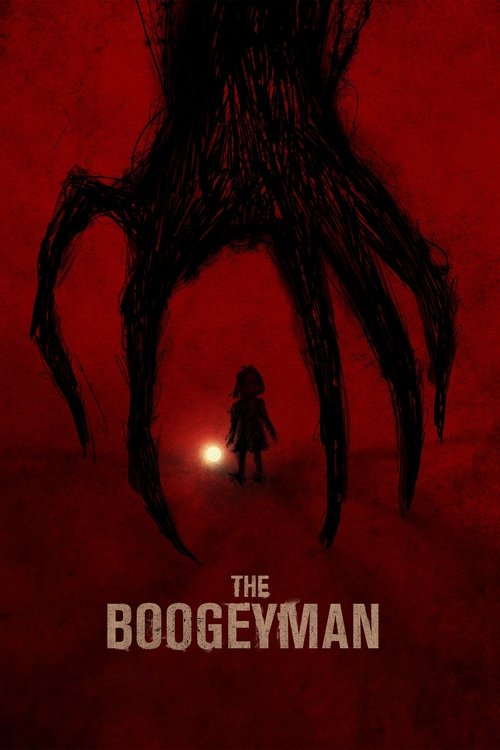
The Boogeyman poster

Is The Boogeyman OK for Kids?

Horror
16+
PG-13⭐ 5.9 / 102023 · 1h 39m
Rob Savage

Where to Watch

United States

Stream

Hulu

Rent

Amazon VideoApple TV StoreGoogle Play MoviesYouTubeFandango At Home
Rent or Buy on Amazon

Streaming data by JustWatch

What's In It

Based on the actual screenplay
πŸ—‘οΈViolence
Extremeβ–Ό
Moments in the script, mildest β†’ most intense
0
Cartoon / Comedic
0
Action & Peril
2
Injuries & Death Shown
7
Graphic & Disturbing
  • The opening prologue shows a creature disguised as a father figure attacking a child named Annie, ending with blood spattering on screen β€” the film's very first scene sets an extremely graphic tone.
  • Lester Billings hangs himself in the Harpers' closet; his body is discovered by Will in a scene that is shown clearly and not implied.
  • Young Sawyer has her tooth violently pulled out by a slamming door, with bleeding from her mouth shown on screen.
  • The Boogeyman attacks Sadie inside a closet during a school party, physically assaulting her with roaring and direct physical contact.
  • Rita Billings attempts to fight the Boogeyman using a bear trap loaded with live rounds in a confrontation that ends with the creature killing her on screen as she screams for help.
  • The basement climax features the Boogeyman grabbing and choking Sadie, attacking both Will and Sawyer, and a fire sequence in which the family battles the creature amid flames and destruction.
  • Violence is sustained, creature-driven, and consistently graphic throughout β€” this is not implied or off-screen horror but repeated on-screen attacks with physical contact, roaring, and visible injury.
πŸ’¬Language
Extremeβ–Ό
Moments in the script, mildest β†’ most intense
10
Mild Words
(damn, hell)
3
Moderate
(ass, b**ch)
12
Strong
(sh*t)
1
Extreme
(f**k)
  • Strong language includes: s**t (12 uses), b**ch (3 uses), da** (2 uses), hell (2 uses).
  • Extreme language includes: f**k (1 use).
  • Mild language includes: cr*p (1 use), jeez (1 use), God used as an exclamation (5 uses).
  • The single use of f**k is the only extreme-level word; the bulk of profanity is strong-tier with s**t being the most frequent word at 12 uses.
πŸ‘»Scary Scenes
Extremeβ–Ό
Moments in the script, mildest β†’ most intense
0
Mildly Tense
3
Startling Moments
3
Genuinely Scary
4
Deeply Disturbing
  • The opening prologue is immediately disturbing β€” the creature disguises itself as a father figure before killing a child named Annie in darkness, establishing a nightmare tone from the very first scene.
  • Lester Billings' therapy session confession, in which he describes how the Boogeyman killed his three children and shows a drawing of the shadow monster, is a deeply unsettling scene designed to make the threat feel real and inevitable.
  • The Boogeyman repeatedly mimics the voice of the family's dead mother Cara β€” including her songs and phrases like 'I have a terrible voice' β€” to lure Sadie and Sawyer throughout the film, making grief itself a weapon of the creature.
  • An exposure therapy session places Sawyer in a pitch-black room where the creature appears alongside roaring sounds and Sawyer's panic attack, blending clinical child psychology with genuine horror.
  • The creature uses Sadie's own voice to call to Sawyer while hunting her through the house β€” a scene designed to disorient and deeply unsettle.
  • Sadie visits the Billings house and encounters Rita Billings holding a gun, learning the creature's history through a scene that escalates from suspense to genuine threat.
  • Multiple basement chase sequences feature the creature hunting the family in complete darkness, culminating in a final confrontation where it nearly kills Sawyer and Will, forcing Sadie to face it alone.
  • Scary scenes are not resolved gently β€” the creature kills characters including Rita Billings, and the family barely escapes the climactic confrontation.
πŸ’•Romance
Very Mildβ–Ό
Moments in the script, mildest β†’ most intense
1
Crushes & Holding Hands
0
Kissing & Dating
0
Suggestive
0
Sexual Content
  • Sadie prepares for a social evening out with friends described as a date night, with her friends commenting on her appearance β€” this is the extent of romantic content in the film.
  • No kissing, relationships, sexual content, or sexual implication of any kind is present.
  • Romance is entirely absent as a theme; the single instance is a passing social moment with no follow-through.
🍺Substances
Moderateβ–Ό
Moments in the script, mildest β†’ most intense
2
Mentioned in Passing
0
Shown Casually
1
Featured Prominently
0
Glorified or Abused
  • Sadie's friends bring a marijuana joint to a school party; Sadie smokes it for the first time and becomes sick, vomiting as a result β€” the scene does not glorify the use and shows a negative physical consequence.
  • A friend named Natalie asks Sadie if she is buying drugs when she visits the abandoned Billings house β€” a passing reference with no substance use shown.
  • A brief reference is made to alcohol not being available at the house β€” mentioned in dialogue only, not shown.
  • The marijuana use is the only substance depicted prominently on screen; its negative outcome (vomiting, illness) frames it as a cautionary rather than glamorised moment.
⚑Stimulation
Extremeβ–Ό
Moments in the script, mildest β†’ most intense
0
Gently Engaging
0
Exciting
3
Intense
1
Overwhelming
  • An exposure therapy session uses flashing lights that gradually darken alongside creature sounds and Sawyer's panic attack β€” a sequence specifically designed to provoke anxiety and disorientation.
  • The basement fire sequence places the family in a chaotic, loud, destruction-filled confrontation with the creature that combines physical danger, fire, roaring, and rapid action simultaneously.
  • The film's final confrontation is described as overwhelming β€” multiple attacks, creature roaring, the family barely escaping β€” and represents a sustained sensory climax.
  • Sadie's closet attack during the party combines sudden creature appearance, roaring, and physical assault in a confined, dark space β€” a high-intensity jump-scare sequence.
  • This film is not suitable for sensory-sensitive children at any age; the combination of darkness, creature sounds, sudden attacks, and chaotic fire sequences creates sustained sensory pressure throughout.
The Boogeyman β€” Heads Up for Parents

Despite its PG-13-adjacent marketing as a mainstream studio horror film, the very first scene β€” a prologue in which a creature kills a child named Annie β€” includes blood spatter and is immediately graphic; parents expecting a slow-burn buildup should know the film establishes its most disturbing imagery before the title card appears.

About The Boogeyman

The Boogeyman (2023) is a supernatural horror film following the Harper family β€” therapist father Will and his two daughters Sadie and Sawyer β€” who are still grieving the recent death of their mother when a malevolent creature called the Boogeyman begins hunting them from the darkness. After a disturbed stranger named Lester Billings dies in their home and warns them about the monster that destroyed his own family, the creature sets its sights on the Harpers. The film blends psychological grief drama with intense creature-feature horror, exploring how fear and loss can consume a family.

⚠️
Watch with your child
The combination of graphic creature violence, a child death in the opening scene, the Boogeyman mimicking a dead mother's voice to psychologically manipulate grieving children, and sustained disturbing horror makes this film appropriate only for ages 16 and up β€” any younger teenager who watches should do so with a parent present who can discuss the grief themes, the on-screen suicide of Lester Billings, and the film's intense and prolonged scares.

Family Takeaways from The Boogeyman

What it gets right

  • βœ“The film shows grief as a shared family experience rather than an individual burden β€” Will preparing the girls for school despite his own pain, and Sadie comforting Sawyer after the tooth injury, demonstrate that small acts of care matter enormously after loss.
  • βœ“Therapy is depicted throughout as a legitimate and valuable tool β€” Will's professional sessions with patients and Sawyer's exposure therapy sessions frame mental health treatment as something families pursue together, not something shameful.

The Boogeyman Cultural & Values Guide

Cultural & Values Guide

Values & Themes
●Traditional family values

The entire narrative centers on a father's journey to reconnect with and protect his daughters after losing his wife. Family healing, paternal responsibility, and keeping the family together despite trauma are the film's core emotional themes.

Community Notes

  • The depiction of Lester Billings' suicide by hanging, discovered on screen by a parent figure, may be a concern for mental health advocacy groups given the film's mainstream horror release without prominent content warnings about suicide depiction.
  • The creature's repeated use of a dead mother's voice and songs to manipulate grieving children may be considered particularly distressing for children who have experienced parental loss.

Cast:Sophie ThatcherVivien Lyra BlairChris MessinaDavid DastmalchianMarin Ireland

Is The Boogeyman Appropriate for Your Child's Age?

βœ—Age 5: Not recommended for 5-year-olds
βœ—Age 8: Not recommended for 8-year-olds
βœ—Age 10: Not recommended for 10-year-olds
βœ—Age 12: Not recommended for 12-year-olds
βœ—Age 13: Not recommended for 13-year-olds
βœ—Age 15: Not recommended for 15-year-olds
βœ“Age 17: Generally appropriate for 17-year-olds

Individual children may vary β€” use your judgment.

Parents also ask about The Boogeyman

  • Is The Boogeyman appropriate for a 16-year-old?
  • Does The Boogeyman have violence?
  • Is The Boogeyman OK for kids?
  • What is the age rating for The Boogeyman?
Browse more parent guides

All movies A–ZHorror movies