🍿 PopcornCheck
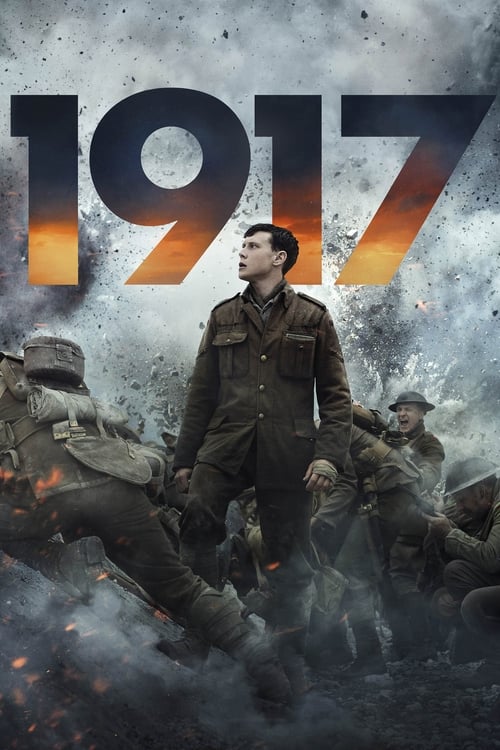
1917 poster

Is 1917 OK for Kids?

WarDramaHistory
15+
R⭐ 8.2 / 102019 · 1h 59m
Sam Mendes

Where to Watch

United States

Stream

NetflixNetflix Standard with Ads

Rent

Amazon VideoApple TV StoreGoogle Play MoviesYouTubeFandango At Home
Rent or Buy on Amazon

Streaming data by JustWatch

What's In It

Based on the actual screenplay
πŸ—‘οΈViolence
Extremeβ–Ό
Moments in the script, mildest β†’ most intense
0
Cartoon / Comedic
4
Action & Peril
2
Injuries & Death Shown
4
Graphic & Disturbing
  • Blake is shot and killed by a German sniper in a destroyed barn β€” his death involves extensive, visible bleeding and is shown without restraint, making it one of the most emotionally devastating scenes in the film.
  • A German soldier suddenly appears and stabs Blake in a fatal wound; Schofield must hold his dying friend as Blake slowly bleeds out and instructs Schofield to continue the mission alone.
  • A trip wire in an abandoned German bunker triggers an explosion that collapses the structure on both soldiers, shown as a terrifying near-death sequence.
  • Schofield's hand is cut on German barbed wire β€” a visible injury shown in detail.
  • A plane is shot down overhead during a dogfight, with the pilot killed on screen.
  • Dead bodies, wounded soldiers, and human remains are encountered repeatedly throughout the trenches and No Man's Land β€” this is a sustained, film-long feature rather than a single scene.
  • Dead animals including horses, cows, and a dog are scattered across the battlefield and encountered by the soldiers.
  • Artillery fire and machine gun fire pour across No Man's Land throughout the journey, creating sustained threat and depicted casualties.
  • Multiple soldiers are shown with shell shock and serious injuries throughout the film.
  • The overall tone of violence is grimly realistic and unrelenting β€” the film deliberately depicts the human cost of war without glorification.
πŸ’¬Language
Extremeβ–Ό
Moments in the script, mildest β†’ most intense
12
Mild Words
(damn, hell)
26
Moderate
(ass, b**ch)
35
Strong
(sh*t)
47
Extreme
(f**k)
  • Characters say 'f**k' or 'f**king' 47 times throughout the film β€” this is the dominant profanity and appears frequently in scenes of stress and danger.
  • Characters say 'bloody' and 'b*llocks' a combined 31 times β€” consistent use of strong British military slang throughout.
  • Characters say 'arsehole' 4 times.
  • Characters say 'da**' and 'b**tard' a combined 18 times.
  • Characters say 'p**s' 8 times.
  • Characters say 'hell' 12 times.
  • No slurs or c-words were detected in the extraction, but the overall volume of extreme profanity β€” particularly 47 instances of 'f**k' β€” makes the language content alone unsuitable for younger viewers.
πŸ‘»Scary Scenes
Extremeβ–Ό
Moments in the script, mildest β†’ most intense
2
Mildly Tense
2
Startling Moments
3
Genuinely Scary
3
Deeply Disturbing
  • Blake is suddenly stabbed by a German soldier who appears without warning β€” a genuinely startling moment that immediately transitions into the deeply distressing scene of Blake slowly dying from his wound.
  • The mineshaft collapse leaves Schofield in complete darkness with falling debris, unable to see β€” a claustrophobic, sustained sequence likely to disturb children and some adults.
  • Blake's prolonged death from his stab wound, with Schofield forced to leave his dying friend to complete the mission, is one of the most emotionally intense and disturbing sequences in the film.
  • A story is recounted about a rat biting a soldier's ear clean off while he slept β€” disturbing imagery even as a verbal account.
  • Walking through No Man's Land with the constant expectation of enemy fire creates sustained, unrelenting tension throughout much of the film's runtime.
  • Dead bodies and human remains are encountered repeatedly and shown without softening across the entire battlefield journey β€” a deeply disturbing and sustained feature of the film.
  • A trip wire is discovered in a German bunker moments before it detonates β€” a high-stakes near-death moment with genuine horror.
  • The discovery that the enemy has deliberately set traps to kill soldiers adds a layer of psychological menace to every environment the characters enter.
  • Schofield alone in darkness attempting to find Colonel MacKenzie creates an extended sequence of intense, isolating fear.
  • Running through an active battle zone with bullets and explosions closing in creates an overwhelming, sustained sequence of terror in the film's climax.
πŸ’•Romance
Moderateβ–Ό
Moments in the script, mildest β†’ most intense
2
Crushes & Holding Hands
0
Kissing & Dating
1
Suggestive
0
Sexual Content
  • A woman in a French town offers Schofield food and shelter, with a suggestive hint that she may be offering more β€” Schofield declines and leaves; nothing is shown or elaborated upon.
  • Soldiers make references throughout the film to wives and mothers they miss at home β€” these are emotional rather than romantic in tone.
  • Blake's letter home mentions caring about people at home but does not elaborate romantically.
  • There is no kissing, no sexual content, and no on-screen romance of any kind.
🍺Substances
Mildβ–Ό
Moments in the script, mildest β†’ most intense
1
Mentioned in Passing
3
Shown Casually
0
Featured Prominently
0
Glorified or Abused
  • Schofield traded his military medal for a bottle of wine β€” this is presented as a wartime exchange rather than glorified drinking behaviour.
  • Soldiers are shown smoking cigarettes and sharing tobacco throughout the film β€” depicted casually as a wartime habit, not glorified.
  • Substance use is never a focus of any scene and is not shown as cool or consequence-free β€” it is presented as the mundane coping behaviour of men at war.
⚑Stimulation
Extremeβ–Ό
Moments in the script, mildest β†’ most intense
0
Gently Engaging
1
Exciting
4
Intense
1
Overwhelming
  • The film's entire premise β€” an unbroken journey through active war zones, No Man's Land, collapsed structures, and enemy territory β€” creates relentless, overwhelming sensory and emotional intensity from start to finish.
  • The mineshaft collapse sequence combines falling debris, complete darkness, disorientation, and physical danger in a single sustained scene that is likely too intense for sensory-sensitive children.
  • Blake's death and Schofield's emotional breakdown following it deliver a sudden, sustained wave of grief and despair that is emotionally overwhelming.
  • The final sprint through active battle lines to reach Colonel MacKenzie β€” with explosions, gunfire, and soldiers falling around Schofield β€” is an extremely intense climactic sequence.
  • An aerial dogfight overhead provides a moment of exciting visual spectacle amid the otherwise relentless tension.
  • The film is not suitable for sensory-sensitive children of any age β€” the sustained pacing, sound design, and emotional weight are designed to be immersive and unrelenting.
1917 β€” Heads Up for Parents

Despite being a war film where audiences expect combat deaths, many parents will be unprepared for the prolonged, intimate nature of Blake's dying β€” he is stabbed early in the film and Schofield holds him for several minutes as he slowly bleeds out, speaking his final words, in a scene of raw grief that is far more emotionally devastating than a typical battlefield death and may genuinely distress teenage viewers.

About 1917

1917 is a harrowing World War One survival film following two young British soldiers, Blake and Schofield, tasked with crossing enemy territory on foot to deliver orders that will prevent 1,600 men β€” including Blake's own brother β€” from walking into a deadly trap. Shot to feel like a single unbroken take, the film is relentlessly tense and deeply immersive, placing the audience alongside the soldiers every step of the way. It is a serious, emotionally devastating war film that prioritises realism and human cost over action-movie spectacle.

⚠️
Watch with your child
The graphic death of Blake, sustained depictions of dead bodies and human remains throughout the film, 47 instances of 'fuck/fucking', and the film's relentless psychological intensity make this essential viewing-with-parent territory for any viewer under 16 β€” the themes of grief, duty, sacrifice, and the human cost of war are also rich enough that teenage viewers will benefit significantly from a parent present to discuss what they have seen.

Family Takeaways from 1917

What it gets right

  • βœ“The film takes the human cost of war with absolute seriousness β€” Blake's death is not a plot device but a prolonged, devastating emotional event that forces the audience to feel the weight of every life lost, a rare and valuable quality in war cinema.
  • βœ“The cherry orchard story Blake tells Schofield β€” describing beauty, home, and connection amid destruction β€” offers a quiet but powerful reminder that the men fighting were full human beings with rich inner lives, not just soldiers.

1917 Cultural & Values Guide

Cultural & Values Guide

Faith & Religion
●Christian themes

The film includes a scene where Blake recites the 23rd Psalm ('The Lord is my shepherd') as he lies dying, providing spiritual comfort in his final moments. This biblical passage serves as a meaningful moment of faith amid the brutality of war.

Community Notes

  • Some critics and historians have noted that the film's focus on two white British soldiers risks centring a narrow experience of WW1, with limited representation of the Indian, African, Caribbean, and other Commonwealth troops who fought in significant numbers on the Western Front.

Cast:George MacKayDean-Charles ChapmanMark StrongAndrew ScottRichard Madden

Is 1917 Appropriate for Your Child's Age?

βœ—Age 5: Not recommended for 5-year-olds
βœ—Age 8: Not recommended for 8-year-olds
βœ—Age 10: Not recommended for 10-year-olds
βœ—Age 12: Not recommended for 12-year-olds
βœ—Age 13: Not recommended for 13-year-olds
βœ“Age 15: Generally appropriate for 15-year-olds
βœ“Age 17: Generally appropriate for 17-year-olds

Individual children may vary β€” use your judgment.

Parents also ask about 1917

  • Is 1917 appropriate for a 15-year-old?
  • Does 1917 have violence?
  • Is 1917 OK for kids?
  • What is the age rating for 1917?