🍿 PopcornCheck
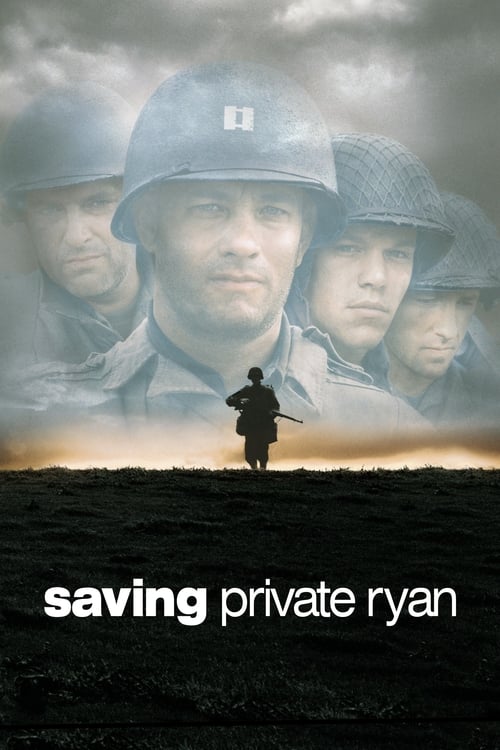
Saving Private Ryan poster

Is Saving Private Ryan OK for Kids?

WarDramaHistory
17+
R⭐ 8.6 / 101998 · 2h 49m
Steven Spielberg

Where to Watch

United States

Stream

Paramount Plus PremiumParamount Plus EssentialParamount+ Amazon ChannelParamount+ Roku Premium Channel

Rent

JustWatch TVAmazon VideoApple TV StoreGoogle Play MoviesYouTubeFandango At Home
Rent or Buy on Amazon

Streaming data by JustWatch

What's In It

Based on the actual screenplay
πŸ—‘οΈViolence
Extremeβ–Ό
Moments in the script, mildest β†’ most intense
0
Cartoon / Comedic
3
Action & Peril
4
Injuries & Death Shown
13
Graphic & Disturbing
  • The Omaha Beach landing sequence is the most sustained and graphic depiction of combat violence in mainstream cinema β€” soldiers are torn apart by machine gun fire the moment landing craft ramps drop, explosions dismember men, blood fills the water, and bodies pile up across the beach in relentless detail lasting approximately 25 minutes.
  • A motorman is ripped to bits by cannon fire; blood and flesh physically shower the soldiers standing nearby β€” shown explicitly on screen.
  • Wade, the squad's medic, is shot multiple times with heavy bullets ripping apart his belly; the squad attempts to save him while he screams in agony before a morphine injection ends his suffering β€” his death is prolonged and emotionally devastating.
  • Jackson, the squad's sniper, is obliterated entirely by a tank shell striking the bridgekeeper's hut where he is positioned β€” he is there one moment and gone the next.
  • The Sarge is shot in the back and torn apart by German fire, dying on sandbags during the bridge battle β€” shown in full graphic detail.
  • Six soldiers are cut to ribbons by machine gun fire attempting to cross a gap β€” all killed β€” followed immediately by a second group of six men raked by the same machine guns, all also killed.
  • The dead bodies of a French farmer's family and their animals are discovered shot to pieces β€” shown without restraint.
  • Throughout the film soldiers are killed by knife β€” Miller stabs German sentries, and throats are slit during a night raid β€” depicted as grim tactical necessity rather than action-movie excitement.
  • The overall tone of violence is documentary-realistic and intentionally unglamorous β€” death is sudden, undignified, and shown in full consequence; there is no heroic slow-motion or sanitised combat anywhere in the film.
πŸ’¬Language
Extremeβ–Ό
Moments in the script, mildest β†’ most intense
40
Mild Words
(damn, hell)
21
Moderate
(ass, b**ch)
20
Strong
(sh*t)
47
Extreme
(f**k)
  • F**k / f**king appears 47 times throughout the film β€” by far the most frequently used strong word.
  • Hell and da** appear 35 times combined; godda** / goddamned appears 28 times.
  • S**t appears 12 times; a** / a**hole appears 8 times; b**tard appears 6 times; p**s appears 3 times.
  • Jesus Christ used as an exclamation 5 times.
  • Language is used exclusively in the context of combat stress and soldier dialogue β€” it is never played for comedy and reflects the extreme psychological pressure characters are under.
πŸ‘»Scary Scenes
Extremeβ–Ό
Moments in the script, mildest β†’ most intense
1
Mildly Tense
1
Startling Moments
3
Genuinely Scary
5
Deeply Disturbing
  • The Omaha Beach landing is described in the extraction as 'overwhelming' β€” relentless machine gun fire, explosions, and the chaos of hundreds dying simultaneously creates a sustained state of sensory and emotional terror unlike almost any other sequence in mainstream film.
  • The discovery of a slaughtered French family β€” including dead animals β€” is deeply disturbing and arrives without warning, confronting the squad and audience with the full civilian cost of war.
  • Wade's fatal wounding and slow death from a morphine overdose is rated 'intense' in the extraction β€” his suffering is prolonged, his teammates are helpless, and Miller's subsequent emotional breakdown in a clearing after Wade dies shows a commanding officer completely unable to contain his grief.
  • The bracketing approach of eighty-eight artillery shells getting progressively closer creates sustained dread as soldiers understand each explosion is zeroing in on their position.
  • Four Tiger tanks advancing on the small American force defending the bridge creates a prolonged 'Scary' sequence β€” the odds are presented as genuinely hopeless, with no reassurance offered to the audience.
  • Jackson being obliterated by a tank shell is listed as 'Startling' β€” his sudden total destruction occurs mid-scene without warning.
  • Frightening scenes are not resolved with comfort or humour β€” most end in death, grief, or retreat, and the film offers no false reassurance.
πŸ’•Romance
Noneβ–Ό
Moments in the script, mildest β†’ most intense
0
Crushes & Holding Hands
0
Kissing & Dating
0
Suggestive
0
Sexual Content
  • No romantic content of any kind is present in the film.
  • No kissing, relationships, attraction, or sexual content of any description appears in the extraction.
  • No romantic or sexual content was detected in the screenplay.
🍺Substances
Mildβ–Ό
Moments in the script, mildest β†’ most intense
2
Mentioned in Passing
2
Shown Casually
0
Featured Prominently
0
Glorified or Abused
  • Miller smokes cigars casually throughout the film β€” shown on screen but not a focus of any scene.
  • Jackson mentions Kentucky whiskey in a daydream sequence β€” referenced in dialogue only, not shown.
  • Morphine is administered to the dying Wade as pain relief β€” presented as a medical act of mercy, not substance misuse.
  • Reiben discusses his mother's lingerie shop in Brooklyn in passing dialogue β€” listed in the extraction but involves no substance use.
  • No glorification of substance use is present; the cigar smoking reflects period-accurate soldier behaviour and carries no aspirational framing.
⚑Stimulation
Extremeβ–Ό
Moments in the script, mildest β†’ most intense
0
Gently Engaging
1
Exciting
4
Intense
1
Overwhelming
  • The Omaha Beach sequence is rated 'Overwhelming' in the extraction β€” constant explosions, gunfire, and sensory chaos sustained for approximately 25 minutes; this sequence alone makes the film unsuitable for sensory-sensitive viewers of any age.
  • The tank battle finale involves multiple simultaneous explosions, rapid scene changes between multiple dying characters, and the approach of four Tiger tanks β€” rated 'Intense' in the extraction.
  • The eighty-eight artillery chase sequence in a jeep, the crater field mortar barrage, and the machine gun nest assault at the bridge are each rated 'Intense' β€” the film offers almost no quiet recovery time between major action sequences.
  • The night raid to capture an eighty-eight gun is rated 'Exciting' β€” slightly lower intensity than the major battle sequences but still involves combat violence and stealth kills.
  • This film is not suitable for sensory-sensitive children or adults β€” the combination of extremely loud sound design, rapid editing during battle, and sustained graphic imagery creates an experience calibrated to overwhelm the senses as part of its artistic intent.
Saving Private Ryan β€” Heads Up for Parents

Despite being rated R and widely known as violent, many parents may not be prepared for the sheer duration and relentlessness of the opening Omaha Beach sequence β€” it runs approximately 25 minutes of uninterrupted graphic combat in which soldiers are torn apart, limbs are lost, and blood fills the ocean, and it is followed almost immediately by a motorman being ripped to bits with blood and flesh showering the surviving soldiers; parents who have not seen the film should be aware this is not standard action-movie violence but a deliberate attempt to recreate the full traumatic horror of the historical event.

About Saving Private Ryan

Saving Private Ryan follows Captain Miller and his squad of American soldiers as they fight through Nazi-occupied France following the D-Day invasion, tasked with locating and bringing home Private Ryan β€” the last surviving brother of four sons sent to war. The film is a brutal, unflinching portrayal of World War II combat directed by Steven Spielberg, widely regarded as one of the most realistic and harrowing depictions of warfare ever committed to screen. Its tone is relentlessly grim and emotionally devastating, balancing acts of profound human decency against extreme violence and loss.

⚠️
Watch with your child
The graphic depiction of war casualties, Wade's prolonged on-screen death, Miller's emotional breakdown, and the overwhelming sensory intensity of the Omaha Beach sequence make this essential parent-accompanied viewing for any teen under 18 β€” the film raises profound moral questions about sacrifice, command, and the cost of war that younger viewers will need an adult present to process safely.

Family Takeaways from Saving Private Ryan

What it gets right

  • βœ“The film refuses to glamorise war β€” every death, including Wade's prolonged and agonising fatal wounding, is shown with full human consequence, making it one of the most honest anti-war statements in cinema history despite its American patriotic framing.
  • βœ“Miller's emotional breakdown in a clearing after Wade's death demonstrates that strength and vulnerability coexist in genuine leadership β€” a powerful corrective to toxic stoicism, showing his men and the audience that grief is not weakness.

Saving Private Ryan Cultural & Values Guide

Cultural & Values Guide

Faith & Religion
●Christian themes

Captain Miller's final words about earning his sacrifice reflect Christian themes of redemption and worth. The film treats faith and prayer with genuine respect, particularly through scenes of soldiers seeking divine comfort before battle.

Values & Themes
●Traditional family values

The entire mission is driven by Mrs. Ryan's grief and the military's commitment to preserving her one surviving son. Family sacrifice and duty are the film's emotional and moral foundation.

Community Notes

  • Some critics and veteran communities have noted that the film's exclusive focus on American soldiers risks presenting the Allied liberation of Europe as a predominantly American achievement, underrepresenting British, Canadian, and other Allied forces who suffered significant casualties on D-Day.
  • German soldiers are depicted almost entirely as faceless enemies to be killed, with minimal humanisation β€” a creative choice that some critics argue reinforces dehumanisation of the enemy even in an otherwise anti-war film.

Cast:Tom HanksTom SizemoreEdward BurnsBarry PepperAdam Goldberg

Is Saving Private Ryan Appropriate for Your Child's Age?

βœ—Age 5: Not recommended for 5-year-olds
βœ—Age 8: Not recommended for 8-year-olds
βœ—Age 10: Not recommended for 10-year-olds
βœ—Age 12: Not recommended for 12-year-olds
βœ—Age 13: Not recommended for 13-year-olds
βœ—Age 15: Not recommended for 15-year-olds
βœ“Age 17: Generally appropriate for 17-year-olds

Individual children may vary β€” use your judgment.

Parents also ask about Saving Private Ryan

  • Is Saving Private Ryan appropriate for a 17-year-old?
  • Does Saving Private Ryan have violence?
  • Is Saving Private Ryan OK for kids?
  • What is the age rating for Saving Private Ryan?