๐Ÿฟ PopcornCheck
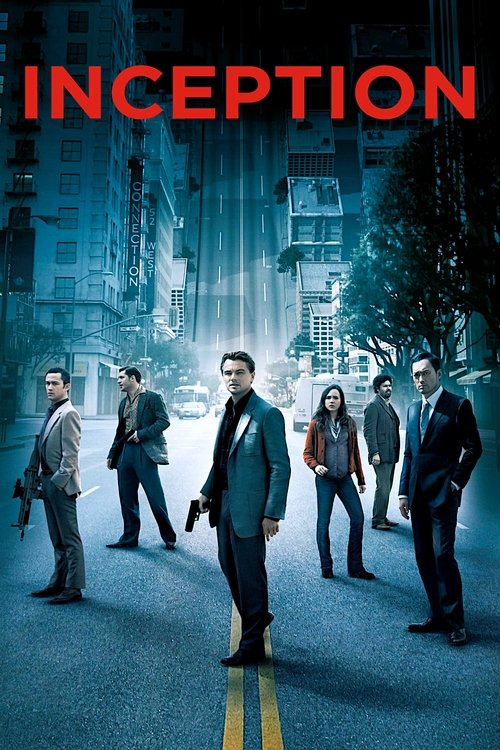
Inception poster

Is Inception OK for Kids?

ActionScience FictionAdventure
13+
PG-13โญ 8.8 / 102010 ยท 2h 28m
Christopher Nolan

Where to Watch

United States

Stream

fuboTVMGM+ Amazon ChannelPhiloMGM Plus Roku Premium Channel

Rent

Amazon VideoApple TV StoreGoogle Play MoviesYouTubeFandango At HomeSpectrum On Demand
Rent or Buy on Amazon

Streaming data by JustWatch

What's In It

Based on the actual screenplay
๐Ÿ—ก๏ธViolence
Moderateโ–ผ
Moments in the script, mildest โ†’ most intense
0
Cartoon / Comedic
5
Action & Peril
4
Injuries & Death Shown
0
Graphic & Disturbing
  • Cobb shoots a guard with a silenced pistol in a head shot โ€” the guard begins to drop and Cobb catches him to lower him silently to the floor; the kill is clinical and deliberate.
  • Cobb shoots Arthur between the eyes at close range to wake him from the dream โ€” Arthur drops dead on screen; this is shown clearly as a tactical mercy kill but is still a point-blank execution.
  • Mal shoots Arthur in the leg without warning during a dream interrogation โ€” Arthur drops screaming; Mal then calmly aims at his other leg before Cobb intervenes.
  • Cobb head-butts a pursuing Cobol Engineering operative in the face during a street chase in Mombasa, then fights through a crowded alley to escape two armed men.
  • Cobb physically slams Saito against a door and punches him in the jaw in the bathroom of the Mombasa hotel room.
  • Nash is shown beaten and bloodied in the helicopter, having been physically assaulted off-screen by Saito's men.
  • The dream cafรฉ explodes violently around Ariadne during her first shared dream โ€” furniture, walls, and people fragment and blast outward; Ariadne is physically knocked off her seat by the blast.
  • Mal lunges at Ariadne with a large kitchen knife in the bridge dream sequence โ€” Ariadne screams and wakes before contact but the threat is visceral and sudden.
  • Violence is purposeful and action-thriller in tone rather than gratuitous, but multiple characters are killed on screen and weapons (silenced pistols, rifles) are used with lethal intent throughout.
๐Ÿ’ฌLanguage
Moderateโ–ผ
Moments in the script, mildest โ†’ most intense
4
Mild Words
(damn, hell)
2
Moderate
(ass, b**ch)
1
Strong
(sh*t)
0
Extreme
(f**k)
  • Characters say 'hell' at least twice (Arthur: 'a face full of glass hurts like hell'; context of general use).
  • 'Bloody' is used twice by Eames ('bloody difficult', 'bloody hell') and once by Yusuf ('bloody cats') โ€” British mild profanity.
  • 'Da**' is not explicitly used in this portion of the script.
  • 'A**hole' is used once by Arthur directed at Nash after waking on the bullet train: 'A**hole! How could you get the carpet wrong?!'
  • 'P**s off' is used once by Eames in response to Cobb's comment about his spelling.
  • No f-words, c-words, or slurs of any kind appear in this script.
  • Language overall is restrained; the strongest single word is 'a**hole' used once.
๐Ÿ‘ปScary Scenes
Extremeโ–ผ
Moments in the script, mildest โ†’ most intense
4
Mildly Tense
3
Startling Moments
3
Genuinely Scary
1
Deeply Disturbing
  • Mal โ€” Cobb's dead wife โ€” appears unexpectedly in the dream world as a hostile, dangerous projection; she is calm and smiling while holding a gun to Arthur's head, then shoots him without warning, and later advances on Ariadne with a large knife in a scene designed to feel like a nightmare.
  • Ariadne's first experience of shared dreaming ends with the cafรฉ violently exploding around her โ€” she cannot wake herself up and must experience the chaos and physical pain before the dream ends, which she finds deeply disorienting.
  • The concept that you can only wake from a dream by dying โ€” explained clinically by Arthur โ€” is a disturbing idea that may unsettle younger viewers.
  • The back room of Yusuf's pharmacy contains 20 comatose dreamers lying on cots, unable to be woken by a hard slap to the face; an elderly man explains their dream has become their reality โ€” this scene has a quiet, eerie horror to it.
  • The rapid cross-cutting between three simultaneous dream levels creates sustained disorientation; the collapsing Japanese castle, flooding stairwell, and bathroom drowning sequence are edited to feel chaotic and threatening.
  • Cobb's description of being trapped without his children โ€” and the phone call where his young son asks 'Is Mommy with you?' โ€” has a quiet emotional horror rooted in loss and grief rather than action.
  • The opening image of a bearded man being washed ashore, barely conscious, with a rifle barrel rolling him over, establishes an immediately unsettling tone.
๐Ÿ’•Romance
Moderateโ–ผ
Moments in the script, mildest โ†’ most intense
0
Crushes & Holding Hands
0
Kissing & Dating
1
Suggestive
0
Sexual Content
  • Cobb and Mal share a brief, charged interaction on the castle rooftop โ€” she leans in invitingly and he says 'I am' (missing her) but pulls back saying he can't trust her; the tone is emotionally intimate but no physical contact occurs.
  • Cobb ties a rope around Mal's chair in a way that involves him kneeling at her feet and lightly touching her ankle through a glove โ€” the staging is suggestive of their past intimacy but nothing explicit occurs.
  • Cobb's grief over Mal and his longing to return to his children implies a deep marital love that drives the entire plot.
  • No kissing, sexual content, nudity, or sexual dialogue of any kind appears in this script.
  • Romance is entirely implied through grief and memory; this is not a romantic film.
๐ŸบSubstances
Extremeโ–ผ
Moments in the script, mildest โ†’ most intense
2
Mentioned in Passing
2
Shown Casually
3
Featured Prominently
1
Glorified or Abused
  • Dream-sharing is facilitated by intravenous sedative compounds delivered via tubes connected to wrists โ€” shown in multiple scenes across the script; Yusuf operates an unlicensed pharmacy formulating his own version called 'Yusuf's Somnacin.'
  • Yusuf's back room contains approximately 20 people who come daily to share a sedative-induced dream for 40 hours of dream time โ€” described by the elderly attendant as people who can no longer dream naturally without the compound; this is a clear depiction of drug dependency, treated with gravity rather than glamour.
  • Eames is introduced in a gambling den described as 'crowded, bustling, smoke-filled'; he has clearly lost all his money gambling and produces forged chips for cash โ€” substance atmosphere rather than direct drug use.
  • Cobb 'downs his drink' alone in his Tokyo apartment after a painful phone call with his children โ€” a single moment of solitary drinking in a grief context.
  • Saito and Cobb drink wine at the dinner table in the opening dream sequence.
  • The sedative compounds are framed as tools of the heist trade and are not glorified; the back-room dreamers are presented as a cautionary image of addiction.
โšกStimulation
Extremeโ–ผ
Moments in the script, mildest โ†’ most intense
3
Gently Engaging
4
Exciting
4
Intense
2
Overwhelming
  • The opening 17 pages of the script cut rapidly between three simultaneous dream levels โ€” the Japanese castle dream, the filthy bathroom real-world layer, and the bullet train โ€” with each layer affecting the others; this multi-threaded editing is cognitively demanding and visually disorienting.
  • The flooding stairwell sequence โ€” where water bursts through all windows simultaneously, Cobb is spun in all directions, and then suddenly surfaces in a bathtub โ€” is deliberately overwhelming and designed to disorient the viewer as it disorients Cobb.
  • The Mombasa chase sequence is fast-paced urban pursuit through narrow alleys, involving a head-butt, Cobb squeezing through a gap between buildings, and armed men converging from multiple directions.
  • The cafรฉ explosion dream sequence features sudden, violent fragmentation of the entire environment with loud sound design โ€” not suitable for sensory-sensitive children.
  • Edith Piaf's 'Non, je ne regrette rien' playing through Nash's headphones is used as a plot device, with the slowed-down version bleeding into the dream as 'massive low-end musical horns' โ€” an unusual and deliberately jarring sonic effect.
  • The script overall cycles between quiet, dialogue-heavy scenes and sudden bursts of intense action; there is no sustained calm; sensory-sensitive children may find the dream-layer structure exhausting.
Inception โ€” Heads Up for Parents

The most likely unexpected moment is in Yusuf's back room pharmacy (pages 51-53): approximately 20 people are shown lying comatose on cots, connected by tubes, voluntarily sedating themselves for 40 dream-hours every day because they can no longer dream naturally โ€” the elderly attendant pokes his finger at Cobb and says 'the dream has become their reality, and who are you to say otherwise?' This is a quiet, deeply unsettling depiction of addiction that has no action or jump scare but may linger with children more than the gun violence.

About Inception

Inception follows Cobb, a professional thief who specializes in stealing secrets from people's minds while they dream. He is offered a chance to return home to his children โ€” from whom he is separated due to unspecified legal trouble connected to his deceased wife Mal โ€” if he can perform 'inception': planting an idea deep inside a target's subconscious. The tone is serious, cerebral, and psychologically complex, blending heist thriller with grief-driven psychological drama.

๐Ÿ‘จโ€๐Ÿ‘ง
Best watched together
The layered dream structure, Mal's role as a grief-projection who threatens and stabs people, the drug-dependency imagery in Yusuf's back room, and the emotionally heavy subplot of a father legally barred from his children all benefit from a parent being present to explain context and answer questions โ€” recommended for ages 13+ with a parent available for under-15s.

Family Takeaways from Inception

What it gets right

  • โœ“The film takes grief seriously โ€” Cobb's inability to stop projecting Mal into his dreams is presented as a psychological wound, not a superpower, and Miles and Arthur both gently push him to face reality rather than escape into fantasy.
  • โœ“Ariadne's introduction models intellectual creativity under pressure โ€” her decision to draw a circular maze when the grid approach fails is a small but vivid demonstration of lateral thinking and refusing to accept the first failure.

Inception Cultural & Values Guide

Cultural & Values Guide

Faith & Religion
โ—Hindu themes

The film's layered dream-within-dream structure directly parallels Hindu concepts of maya (illusion) and multiple levels of reality. The exploration of what constitutes 'real' versus 'illusory' experience reflects core Hindu philosophical teachings about the nature of consciousness and reality.

โ—Buddhist themes

Cobb's journey toward accepting Mal's death and letting go of guilt mirrors Buddhist teachings about attachment as the source of suffering. The film's meditation on the impermanence of mental constructs and the need to release attachment to achieve peace reflects central Buddhist philosophy.


Cast:Leonardo DiCaprioJoseph Gordon-LevittKen WatanabeTom HardyElliot Page

Is Inception Appropriate for Your Child's Age?

โœ—Age 5: Not recommended for 5-year-olds
โœ—Age 8: Not recommended for 8-year-olds
โœ—Age 10: Not recommended for 10-year-olds
โœ—Age 12: Not recommended for 12-year-olds
โœ“Age 13: Generally appropriate for 13-year-olds
โœ“Age 15: Generally appropriate for 15-year-olds
โœ“Age 17: Generally appropriate for 17-year-olds

Individual children may vary โ€” use your judgment.

Parents also ask about Inception

  • Is Inception appropriate for a 13-year-old?
  • Does Inception have violence?
  • Is Inception OK for kids?
  • What is the age rating for Inception?