🍿 PopcornCheck
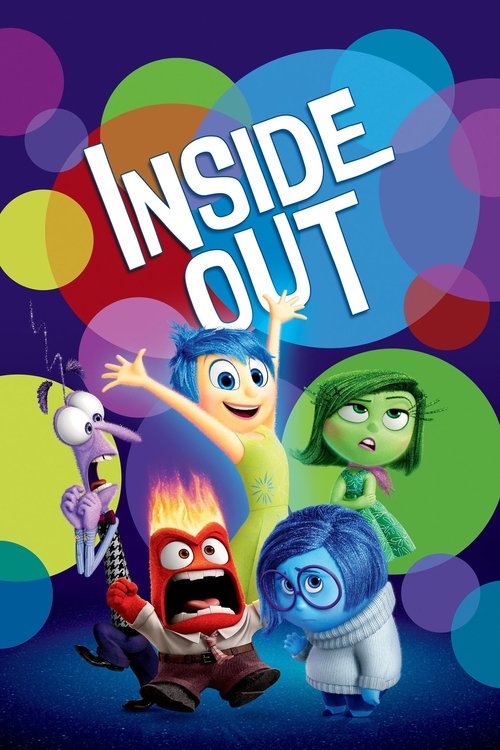
Inside Out poster

Is Inside Out OK for Kids?

AnimationFamilyAdventureDramaComedy
6+
PG⭐ 8.1 / 102015 · 1h 35m
Pete Docter

Where to Watch

United States

Stream

Disney PlusfuboTV

Rent

Amazon VideoApple TV StoreGoogle Play MoviesYouTubeFandango At Home
Rent or Buy on Amazon

Streaming data by JustWatch

What's In It

Based on the actual screenplay
πŸ—‘οΈViolence
Mildβ–Ό
Moments in the script, mildest β†’ most intense
6
Cartoon / Comedic
4
Action & Peril
0
Injuries & Death Shown
0
Graphic & Disturbing
  • Anger repeatedly threatens to fire a beam from his head and does so during Riley's dinner confrontation with her father β€” depicted as a cartoon flame shooting from his head, played for laughs
  • Riley shouts 'Just shut up!' at her father and is sent to her room β€” the emotional conflict is the closest the film comes to interpersonal aggression
  • Jangles the clown chases Joy, Sadness, and Bing Bong through the Subconscious β€” presented as a threat but resolved quickly with no injury
  • Joy and Sadness are knocked around during the collapse of Friendship Island and other Personality Islands β€” depicted as cartoon peril with no injury shown
  • No weapons, no blood, no physical injuries to human characters at any point in the script
πŸ’¬Language
Very Mildβ–Ό
Moments in the script, mildest β†’ most intense
4
Mild Words
(damn, hell)
0
Moderate
(ass, b**ch)
0
Strong
(sh*t)
0
Extreme
(f**k)
  • The word 'idiot' is used once: 'You idiot! It was a dream!'
  • The phrase 'dead meat' is used once by Anger during a hockey scene: 'Give us that puck or you're dead meat!'
  • Riley's emotions reference 'that curse word we know' and suggest she scream it, but the word is never spoken or identified β€” it is played as a joke about a child knowing one forbidden word
  • Disgust uses mild social insults: 'You're too dumb to understand' and 'I don't speak moron as well as you'
  • No f-words, s-words, c-words, or any strong profanity of any kind appear in the script
πŸ‘»Scary Scenes
Moderateβ–Ό
Moments in the script, mildest β†’ most intense
8
Mildly Tense
3
Startling Moments
2
Genuinely Scary
0
Deeply Disturbing
  • Jangles the birthday clown is introduced in the Subconscious as one of Riley's deepest fears β€” he is large, loud, and menacing, shouting 'Who's the birthday girl?' while chasing the characters through a dark environment; likely the scariest single moment in the film for young children
  • The Abstract Thought sequence is visually disorienting β€” Joy, Sadness, and Bing Bong are progressively deconstructed into flat shapes and colours, with Bing Bong crying 'My face! My beautiful face!' β€” may confuse or unsettle very young viewers
  • The Subconscious is described as dark and housing Riley's worst fears, including 'the stairs to the basement' and 'Grandma's vacuum cleaner' β€” played for gentle humour but set in a genuinely eerie environment
  • Bing Bong's disappearance into the Memory Dump β€” he fades silently out of existence while Joy watches β€” is not violent but is emotionally devastating and may cause children to cry
  • Riley's emotional shutdown β€” blank expression, withdrawal from family, sitting alone β€” is portrayed with enough realism to be unsettling rather than scary, particularly for children who have experienced depression in their household
πŸ’•Romance
Very Mildβ–Ό
Moments in the script, mildest β†’ most intense
1
Crushes & Holding Hands
0
Kissing & Dating
0
Suggestive
0
Sexual Content
  • An 'Imaginary Boyfriend' appears briefly in Imagination Land β€” he says 'I would die for Riley' and is described as living in Canada; played entirely for laughs with no physical contact
  • The mother's emotions briefly reference 'that Brazilian helicopter pilot' as a road not taken β€” a single throwaway joke with no follow-through
  • No kissing, dating, sexual content, or romantic relationships of any kind appear in the script
  • No physical intimacy of any kind is depicted or implied
🍺Substances
Noneβ–Ό
Moments in the script, mildest β†’ most intense
0
Mentioned in Passing
0
Shown Casually
0
Featured Prominently
0
Glorified or Abused
  • No alcohol, drugs, tobacco, or any substance use of any kind appears anywhere in the script
  • No references to substance use, even in passing
  • No glorification or negative depiction of substances β€” the topic is entirely absent
⚑Stimulation
Moderateβ–Ό
Moments in the script, mildest β†’ most intense
12
Gently Engaging
7
Exciting
3
Intense
0
Overwhelming
  • The film moves between the real world and the colourful interior of Riley's mind frequently β€” the cross-cutting between two simultaneous storylines may require focused attention from children under 6
  • The Abstract Thought sequence is the most visually intense moment β€” rapid visual fragmentation with characters losing their shapes and dimensions in quick succession
  • The collapse of the Personality Islands β€” Friendship, Honesty, and Family Islands all crumble into the Memory Dump β€” involves several fast-cut peril sequences back to back
  • Overall pacing is moderate and conversational; the majority of the film is gentle and dialogue-driven rather than action-driven
  • Suitable for most sensory-sensitive children; no prolonged sequences of chaotic sound design or strobe-like editing
Inside Out β€” Heads Up for Parents

Despite being a brightly coloured Pixar film, the permanent death of Bing Bong β€” Riley's imaginary friend who fades silently out of existence in the Memory Dump while Joy watches helplessly β€” hits harder than almost any villain death in comparable children's films; parents who have not seen it are frequently surprised to find themselves or their child in tears, and children who have recently lost a pet, a friendship, or a cherished childhood object may need extra support after this scene.

About Inside Out

Inside Out follows 11-year-old Riley as her family relocates from Minnesota to San Francisco, told partly through the personified emotions β€” Joy, Sadness, Fear, Disgust, and Anger β€” living inside her head. When Joy and Sadness are accidentally ejected from Headquarters into Riley's Long Term Memory, the remaining emotions struggle to keep Riley functioning while Joy and Sadness race back. It is a warm, imaginative, emotionally intelligent film that takes children's inner lives seriously.

πŸ‘¨β€πŸ‘§
Best watched together
The film's core emotional themes β€” suppressing sadness, the pressure to perform happiness for parents, and Bing Bong's permanent disappearance β€” are rich enough that children aged 6-9 will benefit significantly from a parent present to answer questions like 'Is Bing Bong really gone forever?' and to discuss whether they ever feel like Riley does when she goes quiet and withdrawn.

Family Takeaways from Inside Out

What it gets right

  • βœ“The film accurately and accessibly portrays how big life transitions affect children's emotional lives β€” Riley's withdrawal, loss of enthusiasm for hockey, and irritability with her parents are shown as understandable responses to upheaval, not character flaws, giving families language to discuss real emotional experiences
  • βœ“The resolution requires Riley to be honest with her parents rather than pretending to be happy β€” the mother explicitly thanks Riley for being 'our happy girl' early on, setting up a thoughtful critique of the pressure placed on children to perform happiness for their parents' sake

Inside Out Cultural & Values Guide

Cultural & Values Guide

Values & Themes
●Traditional family values

The entire emotional journey centers on Riley's parents working together to support their daughter through a difficult transition. The family's unconditional love and commitment to staying united despite challenges drives the core message of the film.


Awards: Academy Award for Best Animated Feature

Cast:Amy PoehlerPhyllis SmithRichard KindBill HaderLewis Black

Is Inside Out Appropriate for Your Child's Age?

βœ—Age 5: Not recommended for 5-year-olds
βœ“Age 8: Generally appropriate for 8-year-olds
βœ“Age 10: Generally appropriate for 10-year-olds
βœ“Age 12: Generally appropriate for 12-year-olds
βœ“Age 13: Generally appropriate for 13-year-olds
βœ“Age 15: Generally appropriate for 15-year-olds
βœ“Age 17: Generally appropriate for 17-year-olds

Individual children may vary β€” use your judgment.

Parents also ask about Inside Out

  • Is Inside Out appropriate for a 6-year-old?
  • Does Inside Out have violence?
  • Is Inside Out OK for kids?
  • What is the age rating for Inside Out?