🍿 PopcornCheck
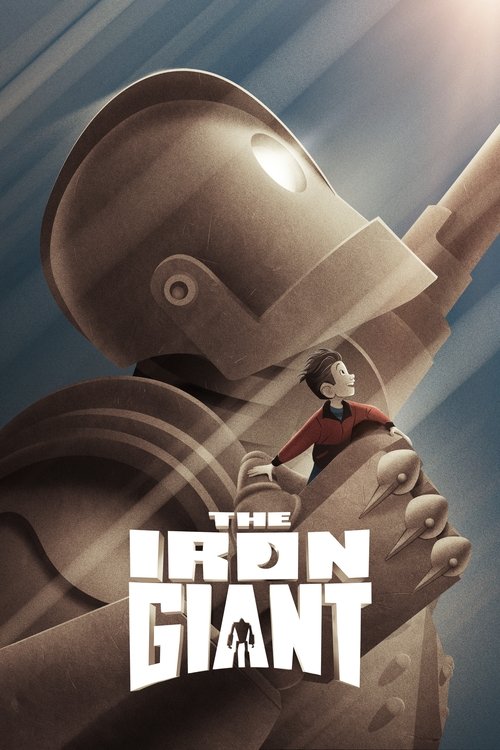
The Iron Giant poster

Is The Iron Giant OK for Kids?

AnimationDramaFamilyScience Fiction
7+
PG⭐ 8.1 / 101999 · 1h 26m
Brad Bird

Where to Watch

United States

Stream

Howdy Amazon Channel

Rent

Amazon VideoApple TV StoreGoogle Play MoviesYouTubeFandango At HomeSpectrum On Demand
Rent or Buy on Amazon

Streaming data by JustWatch

What's In It

Based on the actual screenplay
πŸ—‘οΈViolence
Moderateβ–Ό
Moments in the script, mildest β†’ most intense
1
Cartoon / Comedic
8
Action & Peril
1
Injuries & Death Shown
0
Graphic & Disturbing
  • A ship called the 'Annabelle' sinks after colliding with the Giant during its crash landing β€” shown as a large-scale accident rather than an attack, with no human casualties depicted.
  • The Giant accidentally steps on and destroys various objects throughout the film β€” played in a cartoon style for mild comic effect with no characters harmed.
  • A train wreck occurs when the robot crosses the tracks β€” depicted as a dramatic accident; Hogarth and the Giant work to prevent harm.
  • A deer is shot dead by hunters and the Giant witnesses the kill β€” a brief but emotionally affecting moment of real-world animal death that is shown clearly enough to land emotionally.
  • The military fires on the Giant with tanks and artillery in a sustained bombardment sequence, and the robot's defensive weapons system activates in reaction to being shot β€” this is the most prolonged action violence in the film.
  • A nuclear missile is launched toward the town, and the Giant intercepts it by flying directly into the explosion β€” shown as a heroic sacrifice; the Giant is destroyed on screen in fragments.
  • Overall, violence is action-oriented and consequence-driven rather than graphic β€” no blood, no human deaths shown, and most destruction is mechanical or environmental; the tone treats violence as serious and costly rather than exciting.
πŸ’¬Language
Very Mildβ–Ό
Moments in the script, mildest β†’ most intense
9
Mild Words
(damn, hell)
0
Moderate
(ass, b**ch)
0
Strong
(sh*t)
0
Extreme
(f**k)
  • Characters say 'da**' three times, 'hell' twice, 'darn' twice, 'sucks' once, and 'cr*p' once across the full film.
  • No strong profanity of any kind β€” no f-words, s-words, slurs, or words beyond a mild/moderate level are present.
  • The strongest single word is 'cr*p' (used once); all other language falls firmly in the 'things a child has already heard at school' category.
πŸ‘»Scary Scenes
Moderateβ–Ό
Moments in the script, mildest β†’ most intense
1
Mildly Tense
2
Startling Moments
2
Genuinely Scary
0
Deeply Disturbing
  • Hogarth's first encounter with the Giant occurs in darkness β€” a startling introduction that uses shadow and scale to create genuine tension before the robot is revealed as friendly.
  • Kent Mansley, the government agent villain, directly threatens Hogarth in a scene where he implies he could have Hogarth taken away from his mother β€” this is psychologically threatening and may disturb children who are sensitive to family-separation themes.
  • The Giant suddenly appears in a diner causing widespread panic β€” a startling moment with crowd chaos that may catch younger viewers off guard.
  • The military siege and full bombardment of the town is a genuinely scary extended sequence β€” involving tanks, artillery, explosions, and civilian panic in an American small town.
  • The nuclear missile launch toward a populated area is the film's most frightening sequence and may be particularly resonant for children who have encountered any Cold War history or nuclear anxiety themes.
  • Most scary sequences resolve with the Giant's heroism and sacrifice β€” the film works to give emotional closure, though the Giant's apparent death may provoke grief rather than relief in younger viewers.
πŸ’•Romance
Moderateβ–Ό
Moments in the script, mildest β†’ most intense
0
Crushes & Holding Hands
0
Kissing & Dating
1
Suggestive
0
Sexual Content
  • Kent Mansley uses a 'mind reader' innuendo while inviting a woman to his place β€” a brief, adult-coded flirtatious exchange that most children will not register.
  • No kissing, romantic relationships, or sexual content of any kind is depicted.
  • Romance is entirely absent from the main story β€” this is not a love-story film in any respect.
🍺Substances
Mildβ–Ό
Moments in the script, mildest β†’ most intense
1
Mentioned in Passing
2
Shown Casually
0
Featured Prominently
0
Glorified or Abused
  • Kent Mansley asks about a 'nightcap' before suggesting going to 'his place' β€” adult social drinking referenced casually in dialogue, not shown on screen.
  • Hogarth and Dean share espresso coffee together β€” shown as a casual, friendly moment between a child and an adult, not presented as problematic.
  • A reference to the Sputnik satellite is made as a foreign threat β€” this is a historical/political mention rather than a substance reference and has been included in the extraction for context.
  • No drug use, smoking, or glorification of alcohol is depicted anywhere in the film.
⚑Stimulation
Extremeβ–Ό
Moments in the script, mildest β†’ most intense
0
Gently Engaging
2
Exciting
1
Intense
1
Overwhelming
  • The film opens with warm, low-key pacing β€” Hogarth's home life and initial discovery of the Giant are gently engaging and comfortable for younger viewers.
  • A joyful mid-film sequence of the robot and friends playing and making ice cream together is upbeat and exciting without being overwhelming.
  • The military chase sequence β€” with the Giant carrying Hogarth through town while being shot at β€” is fast-paced with rapid editing and loud sound design, escalating to an intense level.
  • The full military bombardment and nuclear missile launch sequence is classified as overwhelming β€” it is chaotic, loud, emotionally loaded, and sensory-intense; children under 8 or those with sensory sensitivities may find this final act genuinely too much to process comfortably.
  • Parents of sensory-sensitive children should be aware the film's final 20 minutes represent a sustained intensity spike after a largely moderate first two acts.
The Iron Giant β€” Heads Up for Parents

Despite its family film reputation, the moment when Kent Mansley directly threatens nine-year-old Hogarth β€” implying he has the government power to separate him permanently from his mother β€” is surprisingly psychologically menacing and may be more distressing to children with anxiety around family security than any of the robot action sequences.

About The Iron Giant

Set in 1957 small-town Maine during the height of Cold War paranoia, The Iron Giant follows nine-year-old Hogarth Hughes who discovers and befriends a massive alien robot that has crash-landed on Earth. The film is a warm, emotionally resonant adventure about identity, friendship, and choosing to be good, anchored by a government agent's increasingly dangerous obsession with destroying the robot. It builds to a genuinely moving climax in which the Giant sacrifices itself to save the town, earning its reputation as one of the great animated films of its era.

πŸ‘¨β€πŸ‘§
Best watched together
The nuclear missile climax, the Giant's on-screen sacrifice, and Kent Mansley's psychological threats toward Hogarth make this rewarding but emotionally heavy viewing β€” children aged 7–9 in particular will benefit from a parent present to process the ending and discuss the film's themes of identity, fear, and sacrifice.

Family Takeaways from The Iron Giant

What it gets right

  • βœ“The film makes its central moral β€” that you are who you choose to be β€” concrete and emotionally earned through the Giant's sacrifice, giving children a memorable and resonant framework for thinking about identity and character.
  • βœ“Kent Mansley's arc is a thoughtful depiction of how fear and institutional power can drive an otherwise ordinary person to cause catastrophic harm β€” the film treats this as a genuine danger without making it cartoonishly evil, which gives families real material to discuss.

The Iron Giant Cultural & Values Guide

Cultural & Values Guide

Faith & Religion
●Christian themes

The Iron Giant's Christ-like sacrifice to save the town, with his arms outstretched in a crucifixion pose as he says 'Superman' before impact, creates a clear redemption allegory. The film's central message about choosing to be good despite one's nature mirrors Christian themes of salvation and moral transformation.

Community Notes

  • Some educators and critics have noted the film's depiction of government agents and military authority as primarily antagonistic may prompt questions from children about institutional trust β€” worth discussing with younger viewers who may find this confusing given civic education contexts.

Cast:Jennifer AnistonHarry Connick Jr.Vin DieselJames GammonCloris Leachman

Is The Iron Giant Appropriate for Your Child's Age?

βœ—Age 5: Not recommended for 5-year-olds
βœ“Age 8: Generally appropriate for 8-year-olds
βœ“Age 10: Generally appropriate for 10-year-olds
βœ“Age 12: Generally appropriate for 12-year-olds
βœ“Age 13: Generally appropriate for 13-year-olds
βœ“Age 15: Generally appropriate for 15-year-olds
βœ“Age 17: Generally appropriate for 17-year-olds

Individual children may vary β€” use your judgment.

Parents also ask about The Iron Giant

  • Is The Iron Giant appropriate for a 7-year-old?
  • Does The Iron Giant have violence?
  • Is The Iron Giant OK for kids?
  • What is the age rating for The Iron Giant?