🍿 PopcornCheck
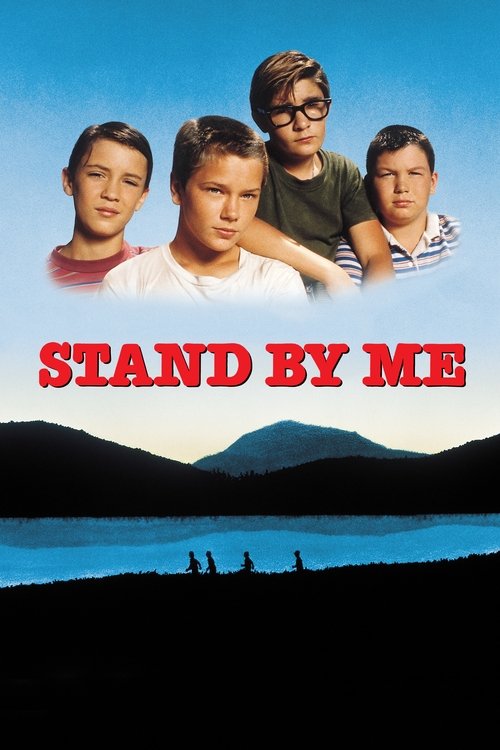
Stand by Me poster

Is Stand by Me OK for Kids?

CrimeDrama
13+
R⭐ 8.1 / 101986 · 1h 29m
Rob Reiner

Where to Watch

United States

Stream

HBO Max Amazon ChannelHBO Max

Rent

Amazon VideoApple TV StoreFandango At HomePlex

Buy

Google Play MoviesYouTube
Rent or Buy on Amazon

Streaming data by JustWatch

What's In It

Based on the actual screenplay
πŸ—‘οΈViolence
Extremeβ–Ό
Moments in the script, mildest β†’ most intense
0
Cartoon / Comedic
9
Action & Peril
0
Injuries & Death Shown
2
Graphic & Disturbing
  • Teddy and the boys sprint across a train trestle at maximum speed as a freight train approaches at high speed β€” Teddy nearly does not make it off the tracks in time.
  • Teddy's backstory reveals his father burned his ear against a stove β€” the injury is referenced and the ear is visibly damaged, depicting parental abuse of a child.
  • Ace punches and physically holds down a younger boy, forcing him to apologise β€” an unprovoked act of bullying violence by an older teenager.
  • Ace's gang confronts the boys at Ray Brower's body and Ace draws a knife; Chris responds by producing a gun to protect the body, escalating the standoff.
  • The decomposed dead body of 12-year-old Ray Brower is discovered on the train tracks β€” shown graphically and treated as a sobering, disturbing moment.
  • The epilogue reveals that Chris, one of the four main boys, was stabbed in the throat and killed while trying to break up a fight as an adult β€” told in narration but deeply affecting.
  • Violence overall is grounded in real-world consequence rather than action-movie spectacle; it is used to underline the film's themes of mortality and the cruelty of the world outside childhood.
πŸ’¬Language
Extremeβ–Ό
Moments in the script, mildest β†’ most intense
22
Mild Words
(damn, hell)
21
Moderate
(ass, b**ch)
70
Strong
(sh*t)
21
Extreme
(f**k)
  • Extreme profanity used heavily throughout: 'f**k' or 'f**king' appears 18 times; 'faggot' is used 3 times as a slur.
  • Strong profanity used frequently: 's**t' appears 47 times β€” by far the most common word in the film; 'a**' appears 15 times; 'p***y' appears 8 times; 'da**' appears 12 times; 'hell' appears 8 times; 'b**tard' appears 3 times.
  • Moderate language also present: 'p**s' appears 4 times; 'cr*p' appears 2 times.
  • The language is entirely consistent with how the boys speak to one another as 12-year-olds β€” it is realistic and colloquial rather than dramatic, which may make it feel more normalised.
  • The word 'faggot' used as a slur reflects the period setting and casual cruelty of the era but is not challenged within the dialogue.
πŸ‘»Scary Scenes
Extremeβ–Ό
Moments in the script, mildest β†’ most intense
2
Mildly Tense
1
Startling Moments
1
Genuinely Scary
1
Deeply Disturbing
  • The train trestle sequence is the film's most viscerally tense scene β€” the boys are trapped on a high bridge with a freight train bearing down on them at full speed, with no safe exit visible.
  • Milo Pressman threatens to release his dog Chopper on the boys for trespassing β€” the threat is sudden and startling, though the danger resolves quickly.
  • At night in the woods, the boys hear mysterious screaming sounds and become convinced they are hearing Ray Brower's ghost β€” genuinely unsettling for younger viewers.
  • The discovery of Ray Brower's decomposed body is the film's most disturbing single moment β€” shown clearly, not implied, and treated with graphic solemnity.
  • The confrontation with Ace's gang, where Ace produces a knife, is tense and threatening β€” the scene resolves when Chris draws a gun, but it remains a high-stakes and frightening standoff.
πŸ’•Romance
Moderateβ–Ό
Moments in the script, mildest β†’ most intense
2
Crushes & Holding Hands
0
Kissing & Dating
1
Suggestive
0
Sexual Content
  • Chris mentions he has been seeing Connie Palermo for over a month β€” described as limited physical contact, no scenes shown.
  • The boys have a brief discussion about Annette Funicello's developing body β€” suggestive in tone but passing and played for adolescent awkwardness.
  • A reference is made to Denny's friend Jane, whom he planned to see after a football game β€” a background detail with no romantic content shown on screen.
  • No kissing, intimacy, or sexual scenes of any kind are depicted in the film.
🍺Substances
Mildβ–Ό
Moments in the script, mildest β†’ most intense
3
Mentioned in Passing
2
Shown Casually
0
Featured Prominently
0
Glorified or Abused
  • The boys casually plan to smoke Winstons (cigarettes) after supper β€” smoking by pre-teen boys is shown or referenced as normalised behaviour without consequences depicted.
  • Teddy's father is described as going on drinking binges, and beer cans used by the drunk father for target practice are referenced β€” alcohol abuse is presented as the backdrop for child neglect and abuse.
  • A childhood anecdote mentions Gordie once ate bleach found under the sink β€” referenced briefly and not connected to substance use themes.
  • Substance use by the boys is presented casually and without moral commentary, which may concern parents of younger viewers.
⚑Stimulation
Moderateβ–Ό
Moments in the script, mildest β†’ most intense
0
Gently Engaging
2
Exciting
3
Intense
0
Overwhelming
  • The train dodge sequence is the film's most intensely stimulating scene β€” rapid action, high physical danger, and loud sound design combine as the boys race across the trestle.
  • The leech attack in the river is viscerally intense β€” multiple boys discover parasites covering their bodies and react with panic; one boy faints.
  • Gordie's extended Lardass pie-eating contest story features an elaborate and graphic vomiting sequence that is played for comedic gross-out effect but is prolonged and detailed.
  • The film's pacing is largely episodic and conversational, making it accessible for most viewers, but the three intense sequences above arrive with little warning.
  • Sensory-sensitive children may find the train sequence and leech scene particularly overwhelming.
Stand by Me β€” Heads Up for Parents

Despite its reputation as a nostalgic childhood classic, the word 's**t' alone appears 47 times and 'f**k' or 'f**king' 18 times β€” parents who preview the film expecting the gentler tone of its cultural legacy may be caught off guard by the sheer density of profanity from 12-year-old characters, and by the epilogue's matter-of-fact revelation that Chris is stabbed in the throat and killed as an adult.

About Stand by Me

Stand by Me is a coming-of-age drama set in 1959 Oregon, following four 12-year-old boys β€” Gordie, Chris, Teddy, and Vern β€” who set off on a two-day hike through the woods to find the body of a missing boy named Ray Brower. The film blends warmth, humour, and genuine emotional weight as the boys bond over the journey and confront difficult truths about family, friendship, and mortality. Narrated by the adult Gordie looking back, it carries a bittersweet, nostalgic tone throughout.

πŸ‘¨β€πŸ‘§
Best watched together
The film's themes of parental abuse, child neglect, class prejudice, and the graphic discovery of a decomposed body β€” combined with Chris's murder in the epilogue β€” are heavy enough that teenagers aged 13–15 will benefit from a parent present to discuss the gap between the film's warm nostalgia and its genuinely dark emotional content.

Family Takeaways from Stand by Me

What it gets right

  • βœ“The film portrays genuine, complicated friendship honestly β€” Chris and Gordie's bond, in which Chris defends Gordie's writing talent and future against the low expectations of their town, shows children what it means to truly believe in someone.
  • βœ“The moment the boys stand together against Ace's gang to protect Ray Brower's body β€” a dead stranger β€” is a powerful depiction of doing the right thing when it costs you something, and choosing dignity over personal reward.

Stand by Me Cultural & Values Guide

Cultural & Values Guide

Values & Themes
●Traditional family values

The entire narrative centers on four boys learning about loyalty, friendship, and moral courage through their journey together. The film emphasizes the importance of standing by friends and family through difficult times, making it a story that celebrates enduring bonds and personal growth.

Community Notes

  • The word 'faggot' is used 3 times as a casual slur between the boys with no in-film challenge or consequence β€” LGBTQ advocacy groups have noted this reflects the period but remains hurtful language for modern viewers.
  • The Lardass story, while comedic in intent, centres on humiliating an overweight child before a crowd β€” some critics have flagged its treatment of body shaming as uncomfortably played for laughs.

Cast:Wil WheatonRiver PhoenixCorey FeldmanJerry O'ConnellKiefer Sutherland

Is Stand by Me Appropriate for Your Child's Age?

βœ—Age 5: Not recommended for 5-year-olds
βœ—Age 8: Not recommended for 8-year-olds
βœ—Age 10: Not recommended for 10-year-olds
βœ—Age 12: Not recommended for 12-year-olds
βœ“Age 13: Generally appropriate for 13-year-olds
βœ“Age 15: Generally appropriate for 15-year-olds
βœ“Age 17: Generally appropriate for 17-year-olds

Individual children may vary β€” use your judgment.

Parents also ask about Stand by Me

  • Is Stand by Me appropriate for a 13-year-old?
  • Does Stand by Me have violence?
  • Is Stand by Me OK for kids?
  • What is the age rating for Stand by Me?