🍿 PopcornCheck
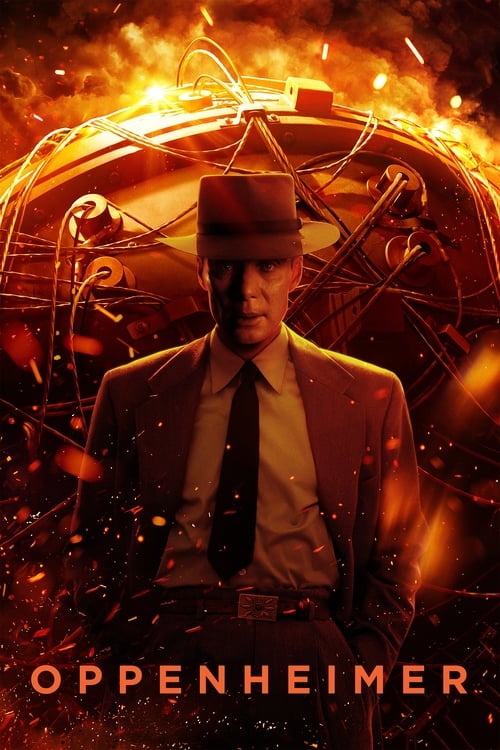
Oppenheimer poster

Is Oppenheimer OK for Kids?

DramaHistory
16+
R⭐ 8.2 / 102023 · 3h 1m
Christopher Nolan

Where to Watch

United States

Stream

Peacock PremiumYouTube TVPeacock Premium Plus

Rent

Amazon VideoApple TV StoreGoogle Play MoviesYouTubeFandango At HomeSpectrum On Demand
Rent or Buy on Amazon

Streaming data by JustWatch

What's In It

Based on the actual screenplay
πŸ—‘οΈViolence
Extremeβ–Ό
Moments in the script, mildest β†’ most intense
0
Cartoon / Comedic
1
Action & Peril
0
Injuries & Death Shown
4
Graphic & Disturbing
  • Young Oppenheimer injects cyanide into an apple intended for his tutor Patrick Blackett in an attempted poisoning β€” the act is depicted deliberately and is deeply unsettling given how casually it is presented.
  • Jean Tatlock's death is shown as an implied suicide involving barbiturates and chloral hydrate leading to drowning β€” the method is described in specific clinical detail and is disturbing in context.
  • Multiple explosions and implosion device tests are shown during the Los Alamos development sequences, featuring large-scale blasts in a scientific context.
  • The effects of the atomic bombs on Hiroshima and Nagasaki are described explicitly: flesh burned in stripes, radiation sickness, and over 220,000 deaths β€” the human cost is stated directly and unflinchingly.
  • Oppenheimer experiences recurring visions of charred corpses and destroyed bodies from the atomic bombings, overlaid on scenes of celebration β€” these graphic images intrude violently on otherwise joyful moments and are among the most disturbing sequences in the film.
πŸ’¬Language
Extremeβ–Ό
Moments in the script, mildest β†’ most intense
12
Mild Words
(damn, hell)
3
Moderate
(ass, b**ch)
7
Strong
(sh*t)
18
Extreme
(f**k)
  • Characters use 'f**k' or 'f**king' 18 times throughout the film β€” this is frequent and used in both casual and heated dramatic contexts.
  • Characters say 's**t' 7 times, 'da**' or 'dammit' 6 times, 'hell' 4 times, 'a**' 3 times, and 'p**s' or 'p**sed' 2 times.
  • The overall language profile is strong and persistent β€” the f-word appears on average more than once every 10 minutes in a 3-hour film, and no content category of strong language is absent.
πŸ‘»Scary Scenes
Extremeβ–Ό
Moments in the script, mildest β†’ most intense
1
Mildly Tense
1
Startling Moments
0
Genuinely Scary
3
Deeply Disturbing
  • During a consultation with Einstein, Oppenheimer visualises a nuclear chain reaction destroying the entire world β€” a deeply disturbing sequence that puts the stakes of the project in existential terms.
  • The Trinity test countdown is an extended sequence of overwhelming tension built around genuine scientific uncertainty about whether the explosion could ignite the atmosphere and end all life on Earth.
  • The Trinity test detonation itself delivers a sudden blinding flash, a massive explosion, and a physical shock wave β€” startling in its intensity even for adult viewers.
  • Oppenheimer suffers recurring intrusive visions of burning bodies and mass destruction that overlay celebration scenes β€” these psychological horror moments are deeply disturbing and recurring throughout the film's final act.
  • The security hearing sequences are psychologically tense and deeply unsettling, depicting coordinated institutional persecution designed to destroy Oppenheimer's reputation through unfair and aggressive cross-examination.
πŸ’•Romance
Extremeβ–Ό
Moments in the script, mildest β†’ most intense
0
Crushes & Holding Hands
1
Kissing & Dating
2
Suggestive
2
Sexual Content
  • Oppenheimer and Jean Tatlock engage in an explicit intimate encounter β€” the script describes the scene using the word 'f**king' and it includes nudity, making it clearly inappropriate for younger viewers.
  • Oppenheimer grabs and kisses Kitty 'hard' during a horseback riding scene β€” the encounter is physically charged and depicted with intensity.
  • Oppenheimer and Tatlock share a kissing scene in a hotel room, and an affair between Oppenheimer and Ruth Tolman is implied during their time in Pasadena.
  • Oppenheimer and Kitty's first meeting involves flirtation and charged hand touching β€” more suggestive in tone but setting up a relationship built on transgression, as both are involved with other people at the time.
🍺Substances
Moderateβ–Ό
Moments in the script, mildest β†’ most intense
2
Mentioned in Passing
2
Shown Casually
1
Featured Prominently
0
Glorified or Abused
  • Cyanide is prominently used as a poison when young Oppenheimer injects it into an apple for his tutor β€” the most alarming substance-related moment in the film.
  • Barbiturates and chloral hydrate are referenced in connection with Jean Tatlock's suicide β€” the specific drugs are named, which may be distressing for families affected by addiction or suicide.
  • Alcohol appears casually and repeatedly throughout the film β€” cocktails, martinis, and spiked eggnog are shown in social settings without negative consequence.
  • Oppenheimer smokes a pipe consistently throughout the film, presented as a habitual and almost defining character trait β€” it is never criticised or shown negatively.
⚑Stimulation
Extremeβ–Ό
Moments in the script, mildest β†’ most intense
0
Gently Engaging
1
Exciting
3
Intense
1
Overwhelming
  • The Trinity test sequence is the film's most overwhelming stretch β€” over 30 minutes of relentlessly building tension, a countdown, a blinding flash, a massive explosion, and a physical shock wave, followed immediately by Oppenheimer's psychological collapse into guilt.
  • The security hearing sequences feature aggressive rapid-fire cross-examination, unfair procedural tactics, and a sense of mounting injustice that generates sustained psychological intensity.
  • Oppenheimer's testimony is punctuated by recurring auditory and visual triggers β€” stamping feet and sudden bright lights β€” that create a disorienting, intrusive sensory experience mirroring his trauma.
  • Multiple sequences in the film's final act show Oppenheimer's moral and psychological deterioration in layered, overlapping imagery β€” this film is not suitable for sensory-sensitive children or anyone with trauma responses to loud, sudden sounds and flashing lights.
Oppenheimer β€” Heads Up for Parents

Despite being a historical prestige drama with a PG-13 or 15 certificate in many territories, the film contains a scene in which Jean Tatlock β€” during a sexual encounter with Oppenheimer β€” is made to read aloud from the Bhagavad Gita while they are intimate, which is the source of Oppenheimer's famous 'Now I am become Death' quotation; parents of Hindu families in particular should be aware that a sacred text is used in an explicitly sexual context, which has caused significant community concern.

About Oppenheimer

Oppenheimer is a sweeping historical drama about J. Robert Oppenheimer, the theoretical physicist who led the Manhattan Project and oversaw the creation of the first atomic bomb during World War II. The film follows his brilliant rise, his complex personal life, and his later destruction at the hands of a government security hearing orchestrated by political enemies. It is a serious, intellectually dense, and emotionally intense film that grapples with the moral consequences of scientific ambition on a civilisational scale.

⚠️
Watch with your child
The combination of explicit sexual scenes with nudity, graphic visualisations of atomic bomb victims including charred corpses, a depicted cyanide poisoning attempt, Jean Tatlock's suicide by drowning and drugs, 18 uses of 'fuck/fucking,' and deeply disturbing recurring visions of mass death means this film requires a parent present for any viewer under 18 β€” and ideally a conversation before and after about the moral questions the film raises around scientific responsibility, political persecution, and the human cost of war.

Family Takeaways from Oppenheimer

What it gets right

  • βœ“The film refuses to make the atomic bomb a straightforward triumph β€” Oppenheimer's recurring visions of burning bodies overlaid on celebration scenes force the audience to sit with the moral cost of the decision, which is exactly the kind of historical honesty that makes this film genuinely educational.
  • βœ“General Groves defending Oppenheimer's integrity despite security concerns, and Rabi standing by Oppenheimer during the hearing, model the real-world value of speaking up for someone being treated unjustly even when it is personally costly.

Oppenheimer Cultural & Values Guide

Cultural & Values Guide

Faith & Religion
●Hindu themes

Oppenheimer directly quotes the Bhagavad Gita with 'Now I am become Death, destroyer of worlds' after witnessing the atomic bomb test. This Hindu scripture reference is central to his moral reckoning with creating the weapon.

Community Notes

  • Hindu community groups have objected to the Bhagavad Gita being read aloud during a sexual scene between Oppenheimer and Jean Tatlock, viewing the use of sacred scripture in an explicitly sexual context as deeply disrespectful.
  • Some critics and historians have noted the film's limited depiction of Japanese victims β€” the deaths of 220,000+ people at Hiroshima and Nagasaki are described and visualised primarily through Oppenheimer's psychological experience rather than through the perspective of those who suffered, which some have argued centres American guilt over Japanese humanity.

Cast:Cillian MurphyEmily BluntMatt DamonRobert Downey Jr.Florence Pugh

Is Oppenheimer Appropriate for Your Child's Age?

βœ—Age 5: Not recommended for 5-year-olds
βœ—Age 8: Not recommended for 8-year-olds
βœ—Age 10: Not recommended for 10-year-olds
βœ—Age 12: Not recommended for 12-year-olds
βœ—Age 13: Not recommended for 13-year-olds
βœ—Age 15: Not recommended for 15-year-olds
βœ“Age 17: Generally appropriate for 17-year-olds

Individual children may vary β€” use your judgment.

Parents also ask about Oppenheimer

  • Is Oppenheimer appropriate for a 16-year-old?
  • Does Oppenheimer have violence?
  • Is Oppenheimer OK for kids?
  • What is the age rating for Oppenheimer?